Save 23% ($351) & Get a Free 1-1 Call with our Team ⏰ : 0d 2h 59m 43s

The market update considers our assessment of the macro, on-chain indicators, and charts. While you are familiar with on-chain indicators and charts from technical analysis, macro analysis is somewhat nuanced. Macro can be any data that is meaningful enough to move the market. The macro analysis could also be reviewing J. Powell’s speech at a FED Press Conference or analysing his answers to questions to gauge future monetary policy.
We then formulate a hypothesis on how the market might react based on our assessment of the macro, on-chain indicators, and charts to provide you with insights on how to respond to the market.
And when all is said and done, you’ll be better informed on when to trade or DCA into the market as an investor.
Now, let’s get into today's market update.
Editor's note: We first shared this update via Discord on September 25, 2023.
TLDR 📃
- Macro analysis suggests a US recession in the next 3-9 months will create headwinds for crypto markets.
- Despite oversold conditions, S&P may bounce to $444 before more downside as rates stay higher for longer.
- On-chain data shows potential Bitcoin support between $20,200-$22,000 if further pullback occurs.
- A good area to DCA into Bitcoin is the $20k-22k range if the macro thesis of lower prices short-term plays out.
Disclaimer: Not financial or investment advice. You are responsible for any capital-related decisions you make, and only you are accountable for the results. “One Glance” by Cryptonary sometimes uses the R:R trading tool to help you quickly understand our analysis. They are not signals, and they are not financial advice. Any capital-related decision you make is your responsibility and yours only.
Macro
We believe that the US will see a recession in the next 3-9 months – this coming recession will be a major headwind that will prevent risk assets from performing well.Many indicators suggest that a recession is on the horizon, but perhaps the main one, which isn't a straight-up indicator in itself, is that the Fed wants to engineer a recession.
This sounds wild, but the Fed has two mandates: (1) keep prices/inflation stable and (2)keep unemployment low.
Unemployment is historically low, while inflation is historically high - the Fed has done some good work raising rates aggressively and moderately squashing demand. All these have, in turn, helped to bring inflation down.
However, the issue is that we're starting to see inflation remain sticky at a level far higher than the FED's 2% mandated target. Last week, Powell spoke hawkishly at the FOMC Press Conference, and in response, the markets priced in a US Interest Rate which will be 'higher for longer'. The market also went ahead to price out the rate cuts they had priced in for 2024.
Higher rates for longer are not ideal conditions for risk assets to perform well. Powell and the FED will likely remain on the gas with this while the labour market remains resilient. A strong labour market adds to inflationary pressures; the FED is trying to engineer the opposite. We will expand on the above principles in tomorrow's recorded video/stream, all backed up with charts and relevant data.
Market action
Following last week's FOMC Press Conference, the Dollar (DXY) moved meaningfully higher, completing its 10th straight week of gains. A bullish Dollar is bearish for risk assets. Despite this, the S&P is currently oversold. Therefore, we may be due for a bounce, possibly extending up to the $444 area, before we see further downside, particularly if the labour market continues to become strong over the coming months.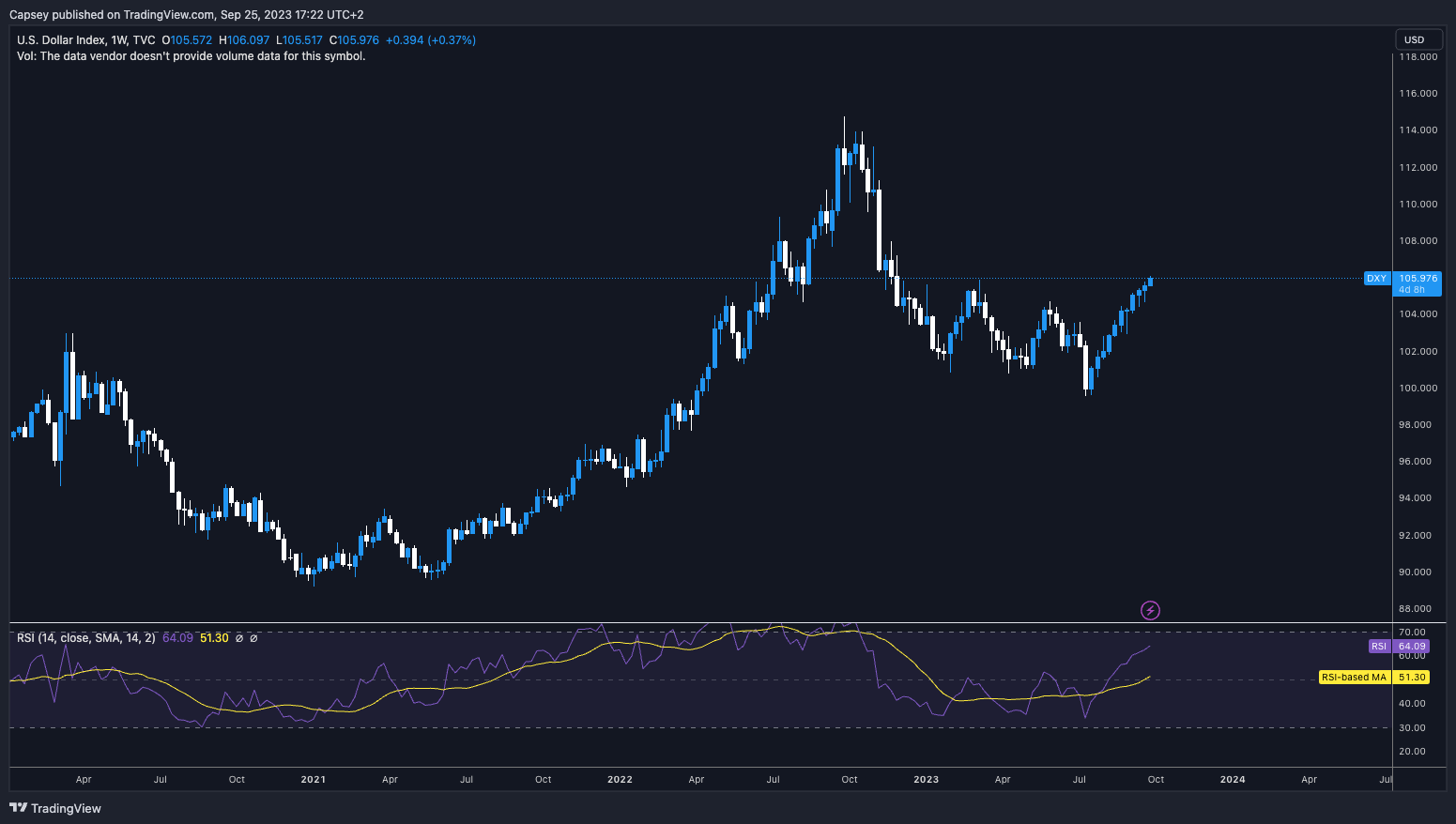
The markets won't respond well to strong labour market data as it'll mean a FED that continues aggressively, and the longer they do this, the greater the chance that they break something in the economy or markets.
However, if the S&P can bounce in the near term, this may help BTC do the same. But again, we still expect risk assets (the S&P and then Bitcoin and Alts) not to perform brilliantly in the coming months. We may stay around current prices or move up slightly, but the odds greatly favour further downside.
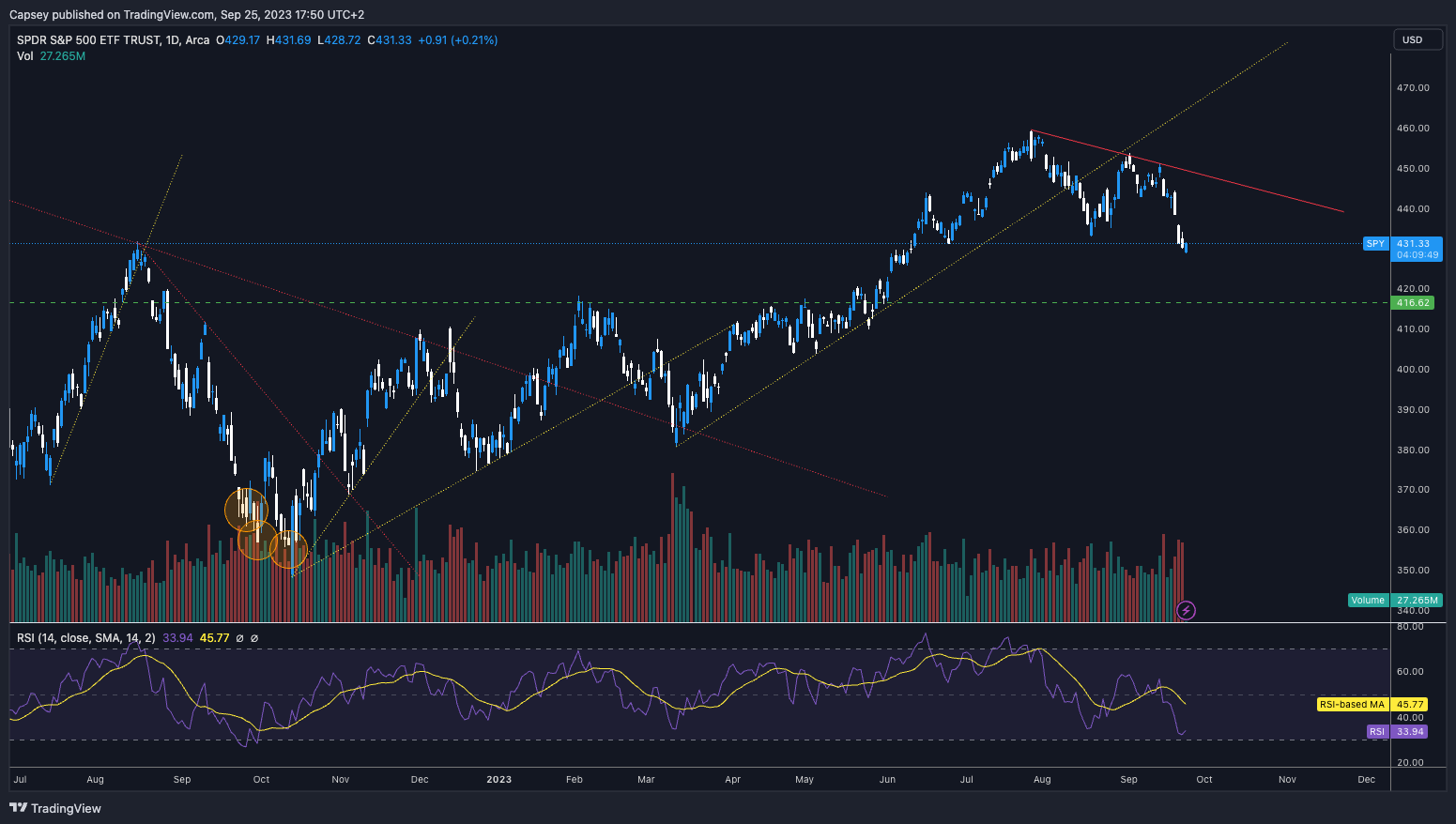
Of course, we care about Bitcoin and what Alts can outperform BTC. Let’s look at some metrics that may help us identify an area where BTC can find a bottom, assuming it does pullback.
On-chain metrics for BTC
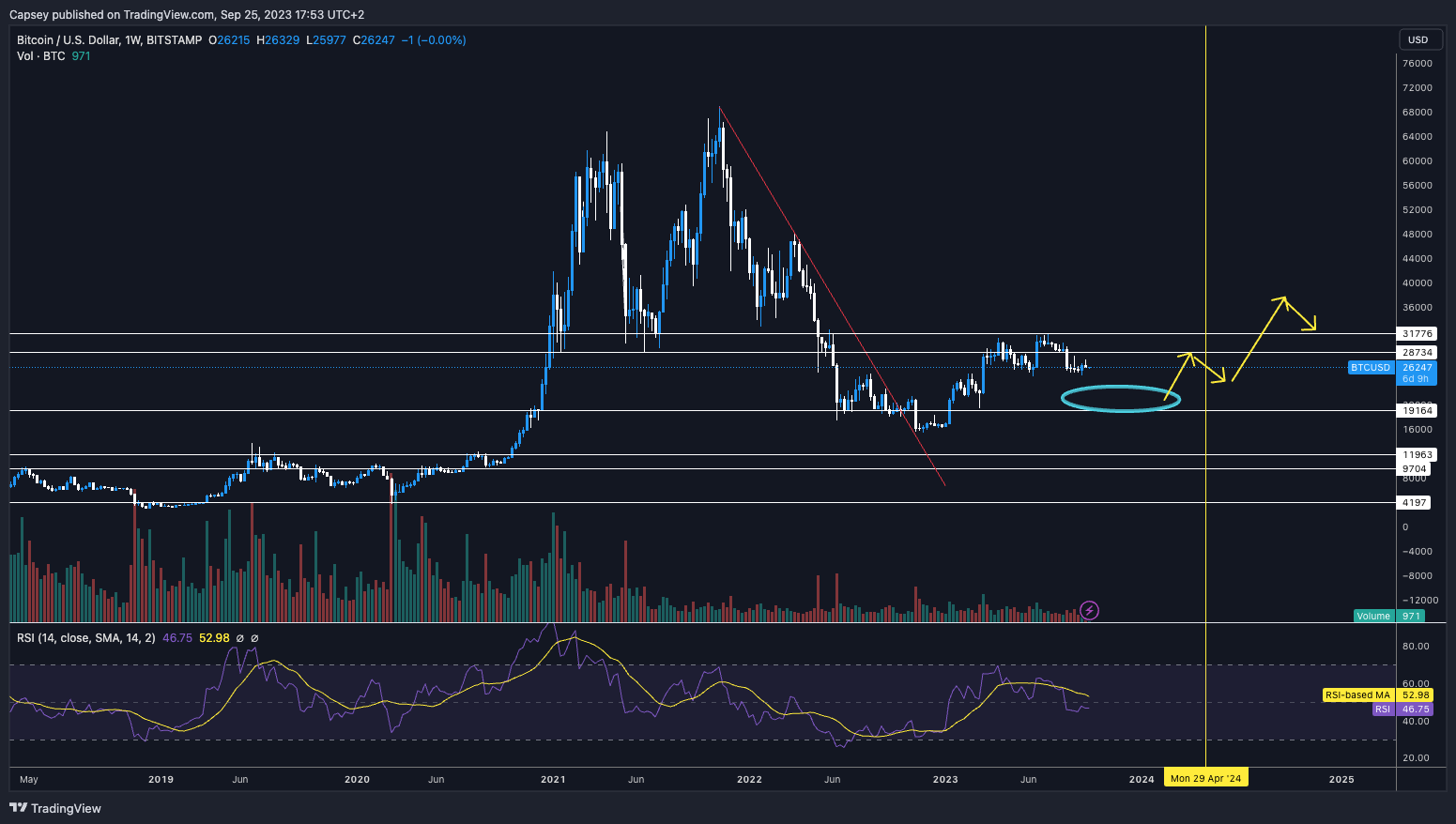
We will release a monthly report in the next few days; however, we will cover just a few metrics for now.We have previously given reasons why we see the market going lower over the coming 1, 3, maybe even 6-9 months. Now, we will try to identify a good entry price for buying BTC, assuming we are right about it going lower over the mid-term.
Realised Price
This is the average cost basis of all coins on-chain and has previously been a good area of support for Bitcoin price, and therefore may present a good buying opportunity. We can currently see that the Realised Price is at $20,275.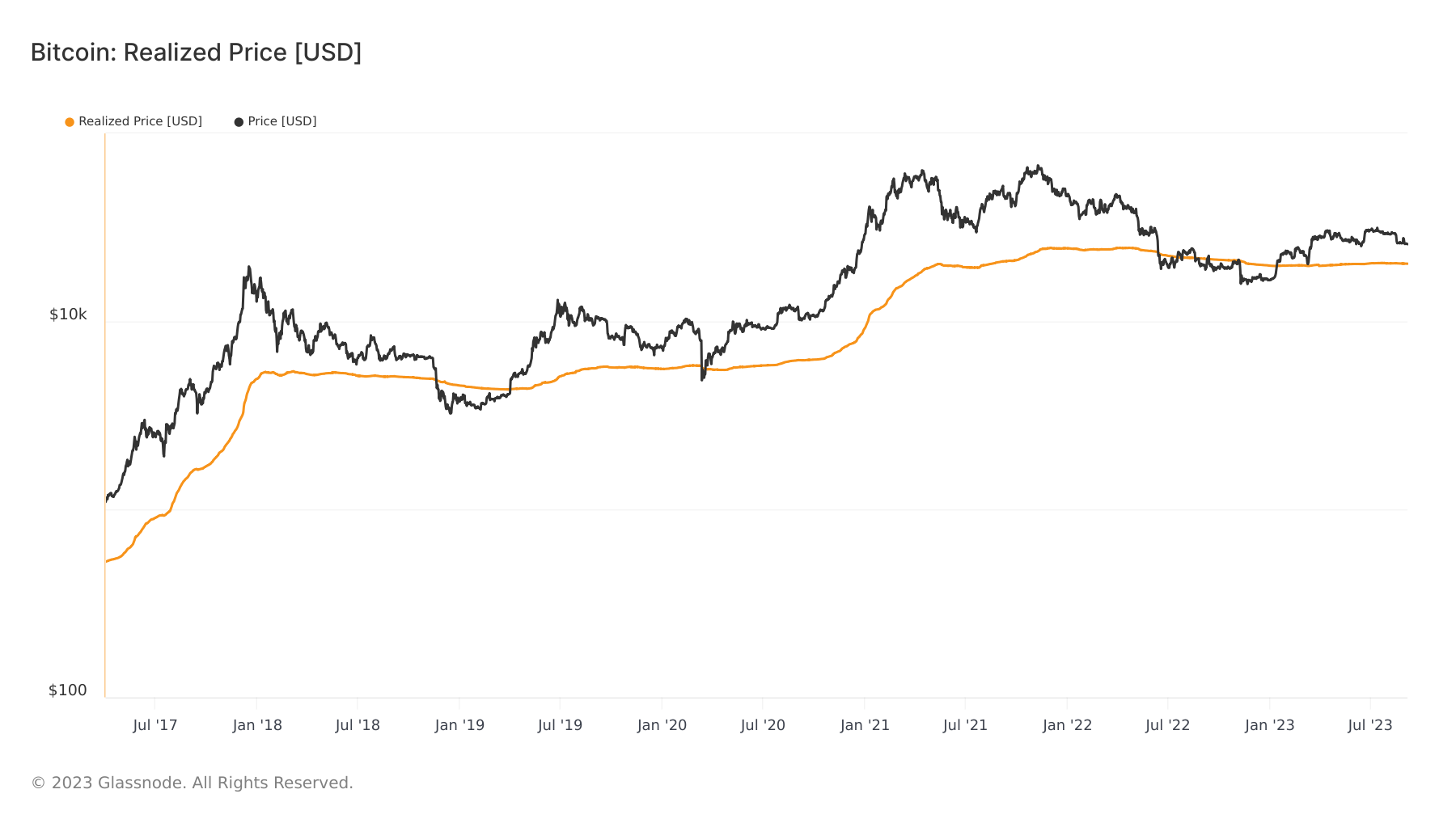
Bitcoin Electrical Cost
This is the cost miners pay to mine Bitcoin. This suggests that Bitcoin is at least worth what it costs to produce. The current Electrical Cost of Bitcoin is $21,243. Again, Bitcoin rarely goes as low as its Electrical Cost; therefore, when BTC’s price has visited the Electrical Cost level, it has proved to be a good area to buy Bitcoin. 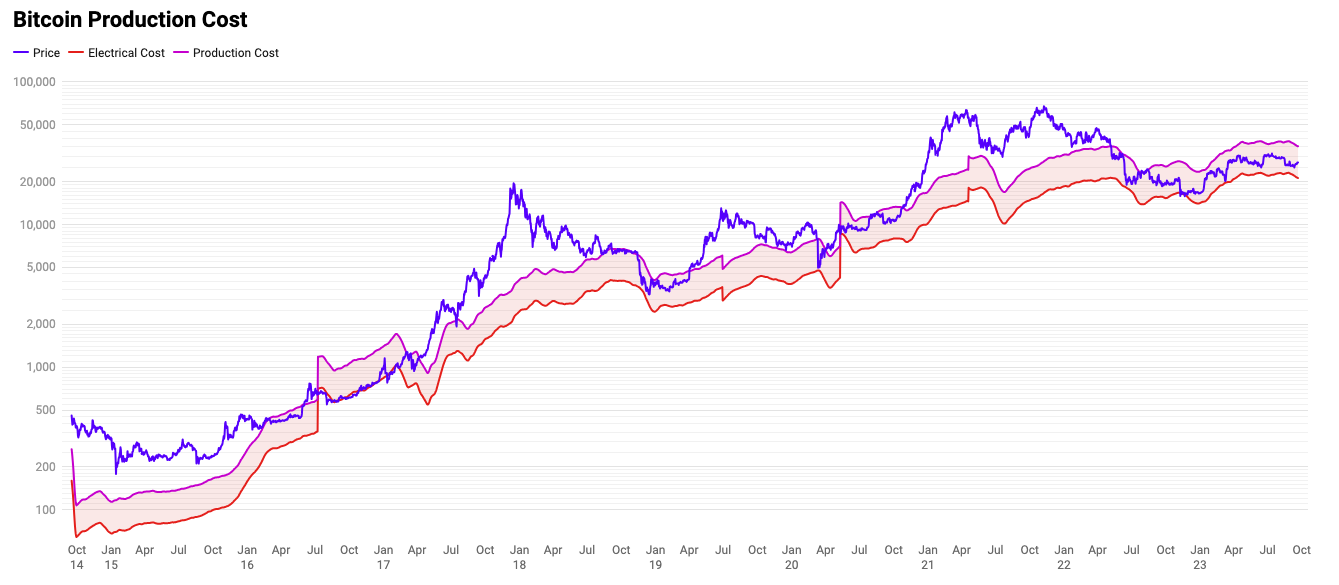
Cryptonary’s take 🧠
If our macro breakdown suggests that risk assets are likely to struggle or at least not perform very well over the coming months, then the area between $20,200 and $22,000 may be a good area to actively DCA into Bitcoin.We do believe FTX was peak fear. Unless the recession that we predicted turns out to be far worse than expected, we believe that the Bitcoin price bottom is already in. We will gladly take advantage of the $20,200 to $22,000 area for buying Bitcoin.
Recommended from Cryptonary