Save 23% ($351) & Get a Free 1-1 Call with our Team ⏰ : 0d 2h 59m 44s
Market Update: Bitcoin Soars Amid Spot Demand
Markets are currently being pulled between two powerful forces: escalating geopolitical conflict in the Middle East and a critical set of upcoming U.S. economic data. Oil prices are rising, rate expectations are shifting, and Bitcoin has broken out despite the increasingly fragile macro backdrop. In this report, we break down the key developments shaping markets right now and what they could mean for crypto in the weeks ahead. Let's dive in...
Disclaimer: This is not financial or investment advice. You are responsible for any capital-related decisions you make, and only you are accountable for the results.
Topics covered:
- Friday's Jobs Report.
- Closing of the Strait Pushes Oil Prices Higher.
- Bitcoin Breaks Out Driven By Strong Spot Buying.
- Cryptonary's Take.
Friday's Jobs Report
The attention and focus of markets is currently on the war between the US/Israel and Iran, rather than on tomorrow's jobs report.Estimates for tomorrow's jobs report are for the Unemployment Rate to come in unchanged at 4.3%, and for Payrolls to show 59k jobs added.
Should these prints come in as estimated, the market would likely take that positively, even though it doesn't aid the argument for cuts, and it actually pushes rate cuts further out. The risk to markets would be if we saw weaker numbers, i.e., an increase in the Unemployment Rate, and lower jobs growth. Markets wouldn't like this as it would signal a potentially weaker labour market, whilst inflationary pressures are likely to come alongside this with the rise in oil prices due to the conflict in the Middle East.
Ultimately, markets will be looking for the numbers to come in line with estimates, with the focus then quickly shifting back to the Middle East war.
Closing of the Strait Pushes Oil Prices Higher
Whilst the onslaught from US and Israeli forces continues on Iran, the Iranians have mostly targeted Israeli military bases and cities, US military bases and consulates in the region, whilst the UAE has also been subject to heavy strikes, which have mostly been intercepted.Alongside military targets and cities, the Iranians have targeted the Strait of Hormuz, which is now effectively shut. It's not, it's open, but ships are at considerable risk of being struck by an Iranian drone should they try to pass through. This has resulted in Maersk pulling back its ships, with insurers refusing to insure ships attempting to pass through the Strait. This is extremely problematic as nearly 20% of the world's oil flows through this Strait each day. Already, we've seen:
- Qatar is shutting down its LNG liquefaction at the Ras Laffan plant, halting all exports. This is one-fifth of the global LNG supply.
- China has told top refiners to halt diesel and gasoline exports, hoarding for themselves.
- Iraqi producers DNO, Gulf Keystone and Dana Gas have halted output as a safety measure. This removes 3m barrels of oil per day.
- Saudi Arabia's Ras Tanura oil refinery has also been targeted, although production has continued.
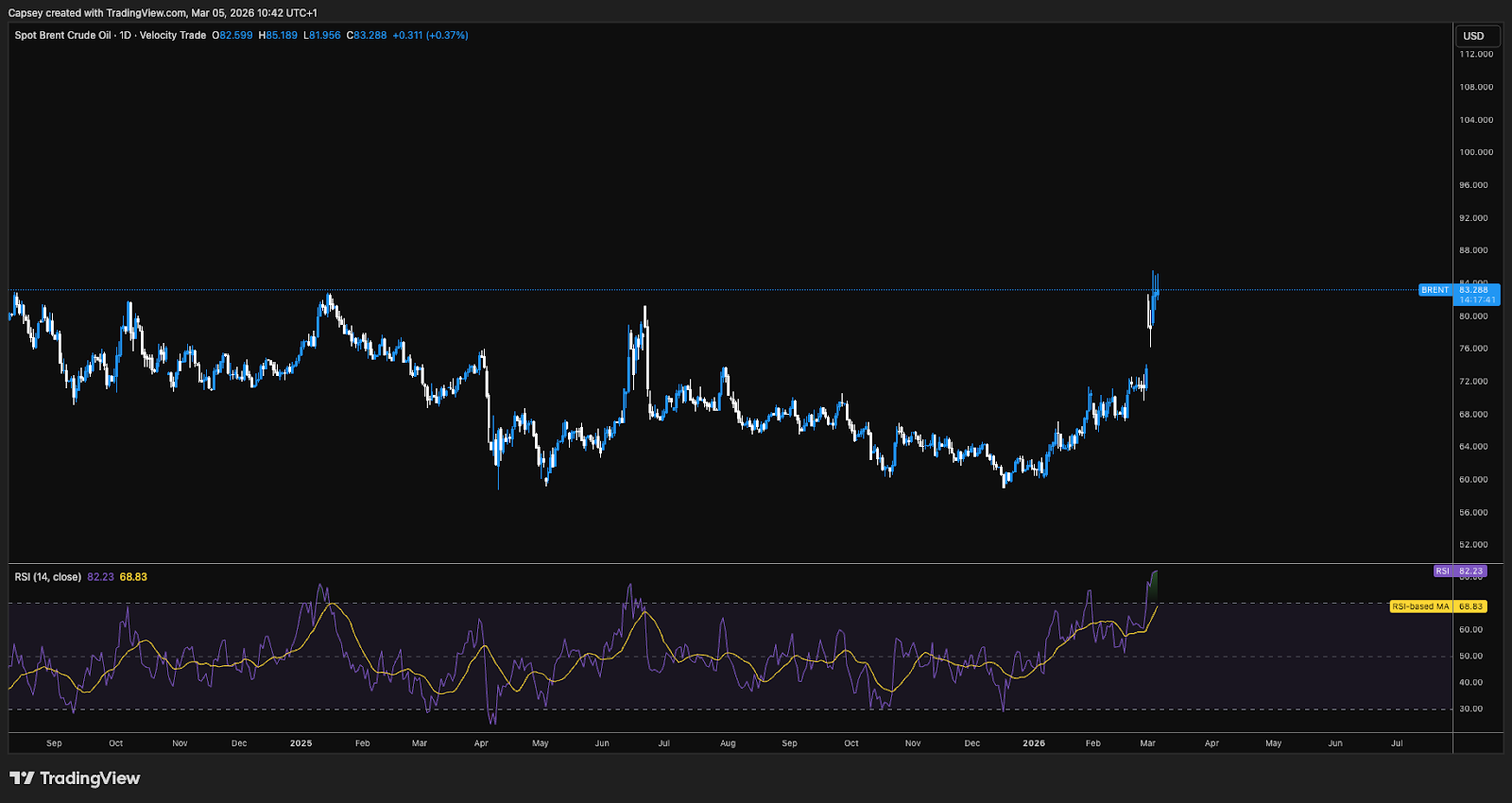
Brent Crude Oil 1D Chart
There have been news reports of Iranian intelligence reaching out to intermediaries looking to negotiate with the US regarding ending the war; however, that has been denied from the Iranian's side, whilst the US and Israelis have maintained their willingness to continue with the war.
So, assuming the war continues, and we don't see any viable off-ramps in the near-term, it's likely the Strait of Hormuz will remain closed, as the Iranians can use drone attacks, and only several are needed to stop vessels passing through. Disrupting the transportation of oil through the Strait is perhaps one of Iran's greatest weapons. The reason is the inflationary impact that'll be felt should the price of oil continue to rise. Should the Strait remain closed, Brent Crude would likely move up to $100.
The impact of this would be increased inflation in the US and throughout the world, and this would directly go against the Trump administration's plans to lower inflation, in order for the Fed to reduce interest rates.
A new bout of inflation that sees interest rate cuts pushed out until Q3 at the earliest, is one of the worst outcomes for the Trump administration, and going into the mid-terms in November, it is likely be the case that Republicans will lose those mid-terms.
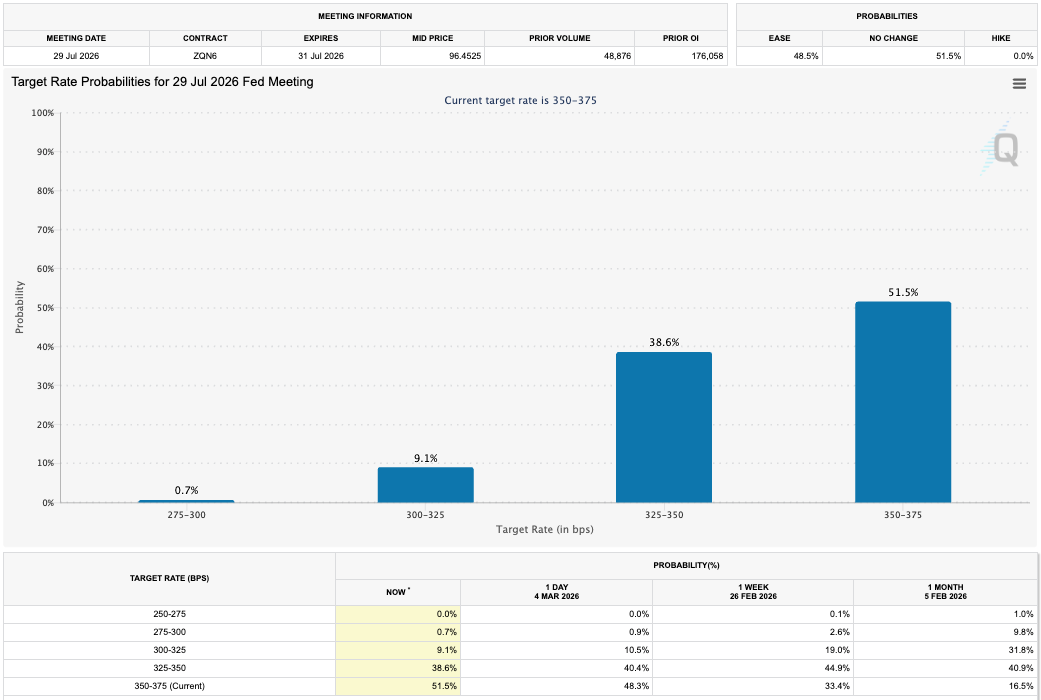
Currently, the next interest rate cut is priced for the September meeting. The July meeting is priced at a 51.5% chance that the Fed will remain on hold, although these odds are rising. Just a week ago (before the conflict broke out), the market was pricing for a cut in July, with the Fed remaining on hold, price at 33.4%. So, the odds of the Fed remaining on pause through July have increased significantly, and the longer the conflict lasts, and the longer the Strait remains 'closed', the more likely cuts are going to continue to be priced out. This is unsupportive for risk assets.
Ultimately, the longer the conflict in the Middle East lasts, the worse it is for inflation. The Trump administration has guaranteed safety for the vessels passing through, but it's still up to those vessels to make the journey, and currently, they're not willing to.
Target Rate Probabilities for 29 July 2026 Fed Meeting
Bitcoin Breaks Out Driven By Strong Spot Buying
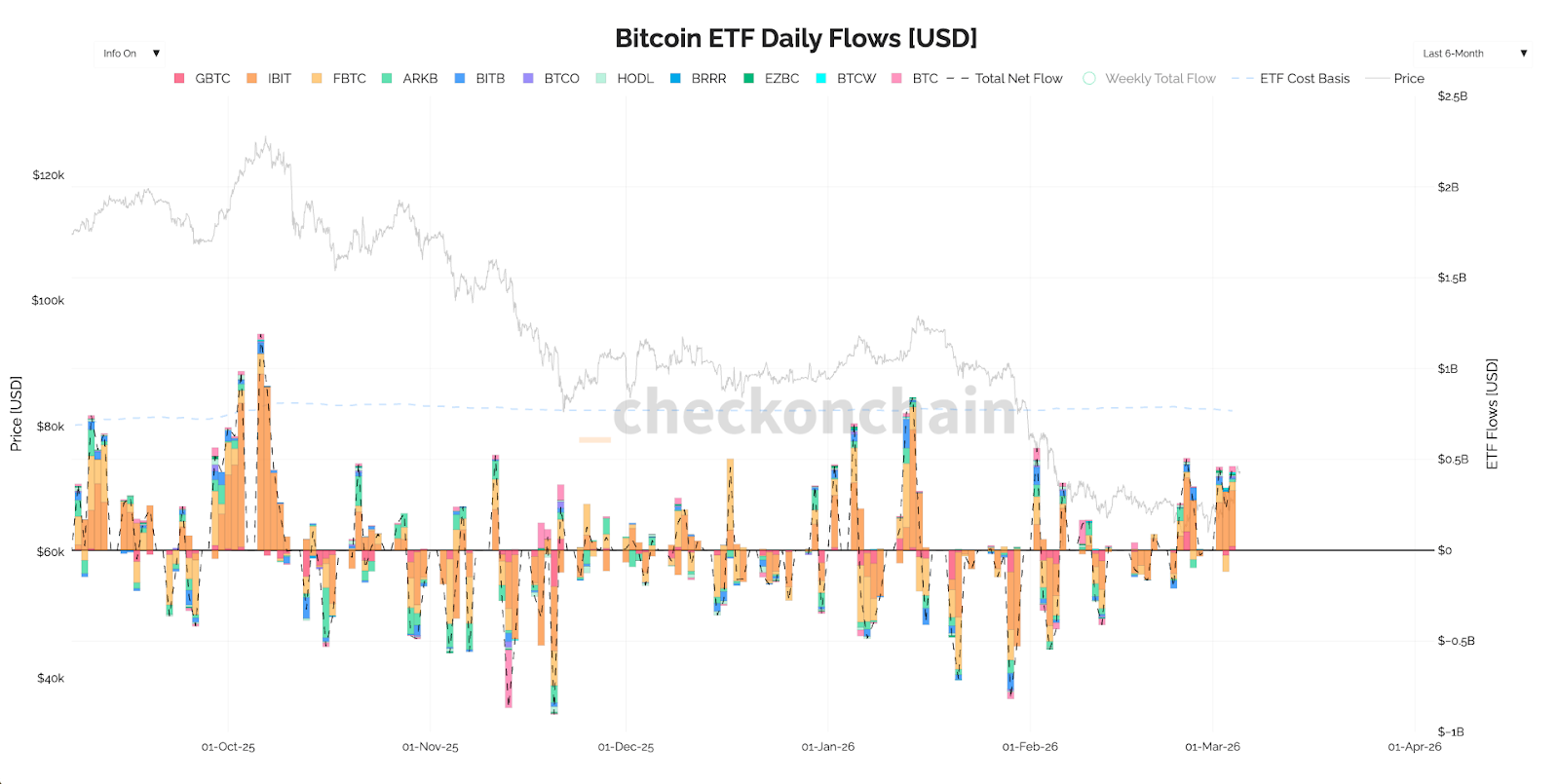
Yesterday (Wednesday 4th March), Bitcoin convincingly broke out of its $71k-$72k resistance, with price touching $74k, before pulling back to test the $71k-$72k zone as new support.Price was driven higher on strong Spot buying via the ETFs, whilst Shorts were liquidated.
Bitcoin ETF Flows
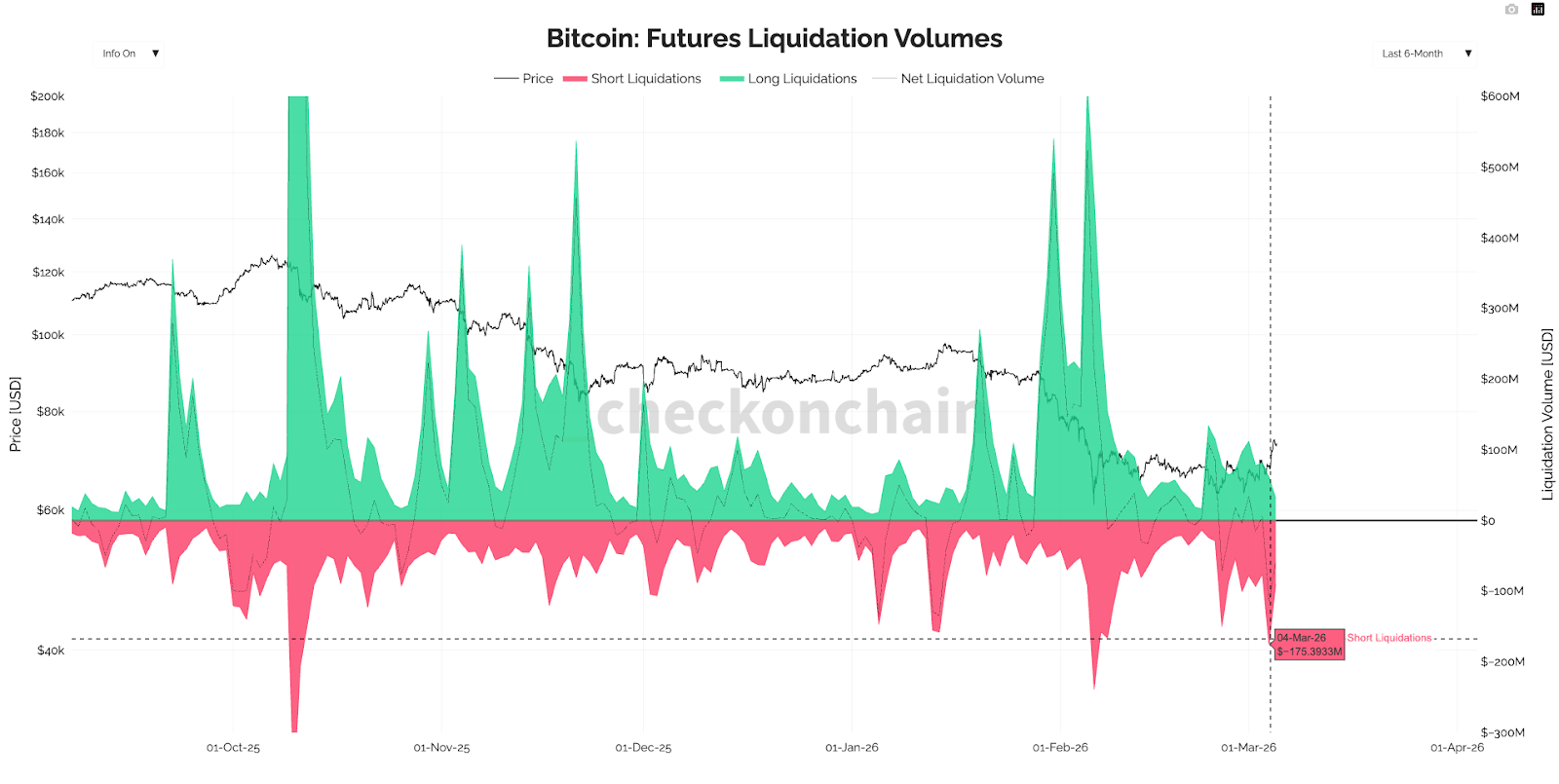
Short liquidations have been dominant on the price breakout of $72k.
Short Liquidations Dominate
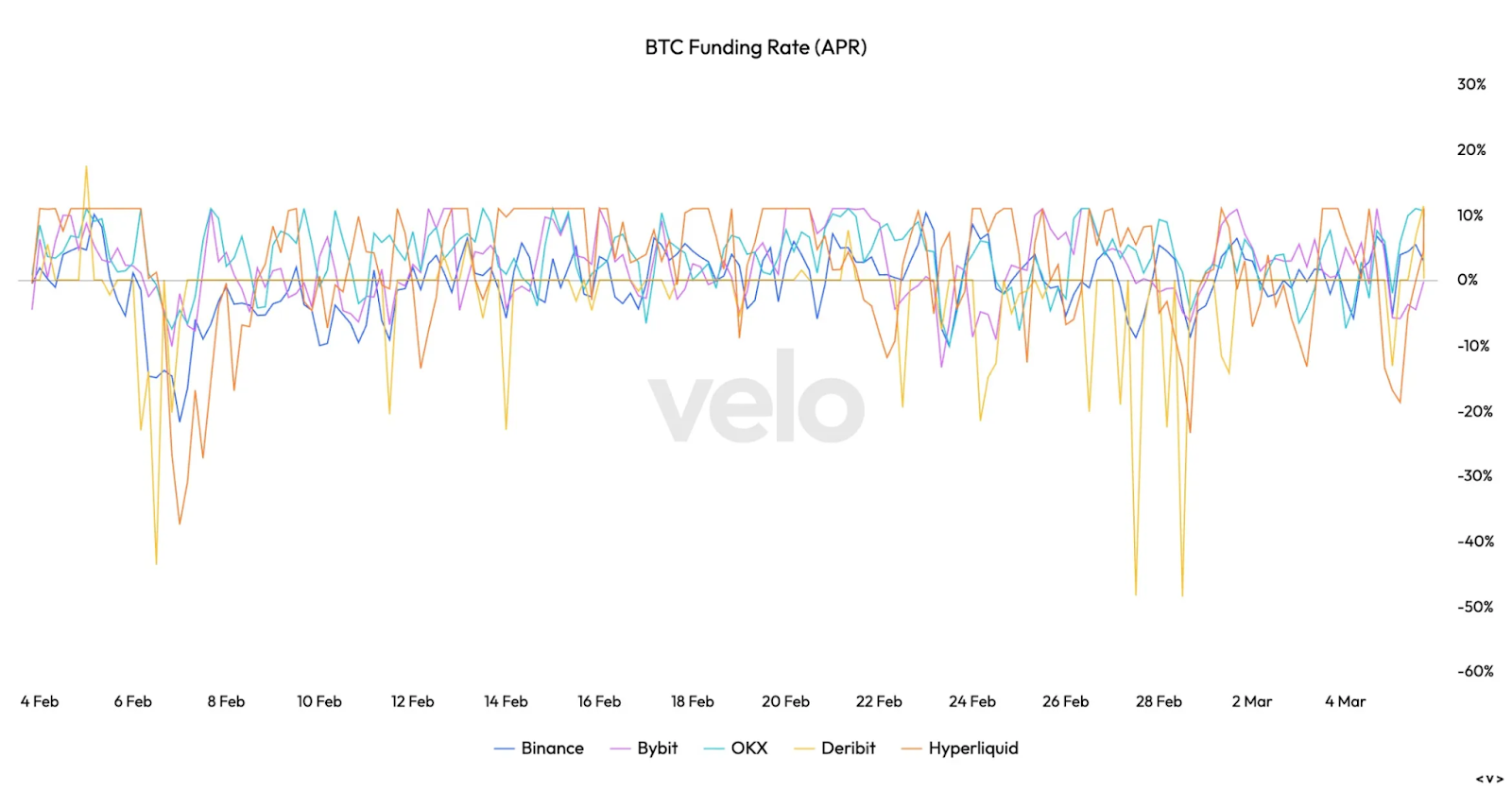
This comes as sentiment has been extremely negative, and this has been reflected in positioning. Funding Rates have remained negative over the last month, if not more skewed to being negative, indicating that leverage traders are paying a premium to be Short. Meanwhile, the Fear & Greed index has been at extreme fear levels, and traders have bought up protection. This is shown in a rising Put/Call ratio. A rising Put/Call ratio shows that traders are fearful of downside and are therefore buying Puts to protect against their portfolio falling in value. When the Put/Call Ratio reaches extreme highs, this can indicate a local low or a major low in prices.
Neutral-to-Negative Funding Rates
Rising Put/Call Ratio
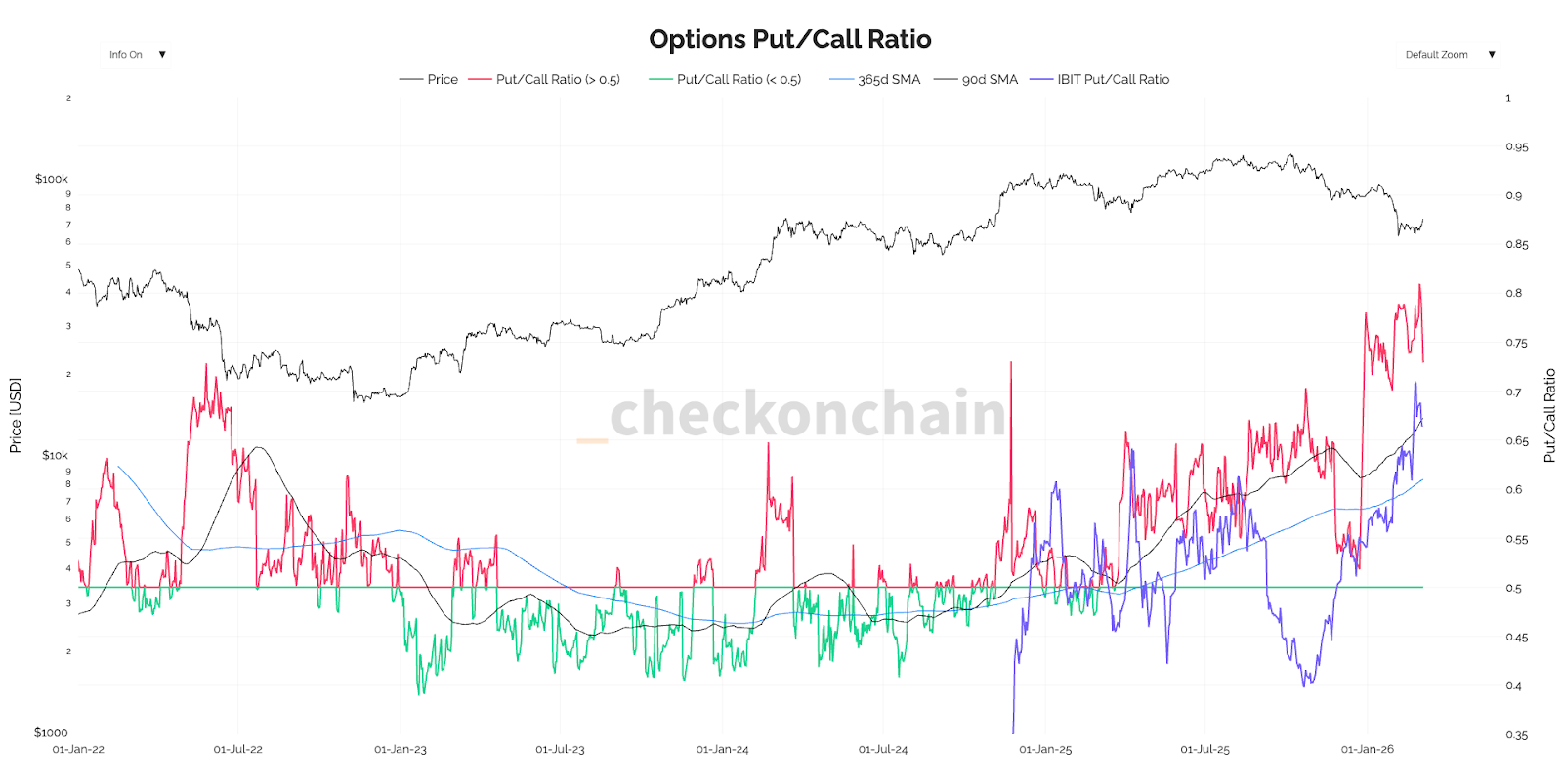
The oversold levels, the poor sentiment, and the fear of further downside have led the market to be overly positioned for further downside, which has resulted in price moving in the opposite direction - as it usually does when the market is overly positioned in a particular direction.
But, with liquidity in markets not at sufficient levels to stimulate risk assets, and with the conflict in the Middle East likely to result in higher inflation over the coming months, this pushes out Fed cuts. This is unsupportive for risk assets, and therefore, the data suggests to us that more likely than not, this move higher in price is likely to be a relief rally.
In terms of resistance levels for price, there are a few:
- True Market Mean Price = $78k
- IBIT Cost Basis = $80k
- ETF Cost Basis = $82k
- Technical Resistance = $80k-$84k
- STH Cost Basis = $86k
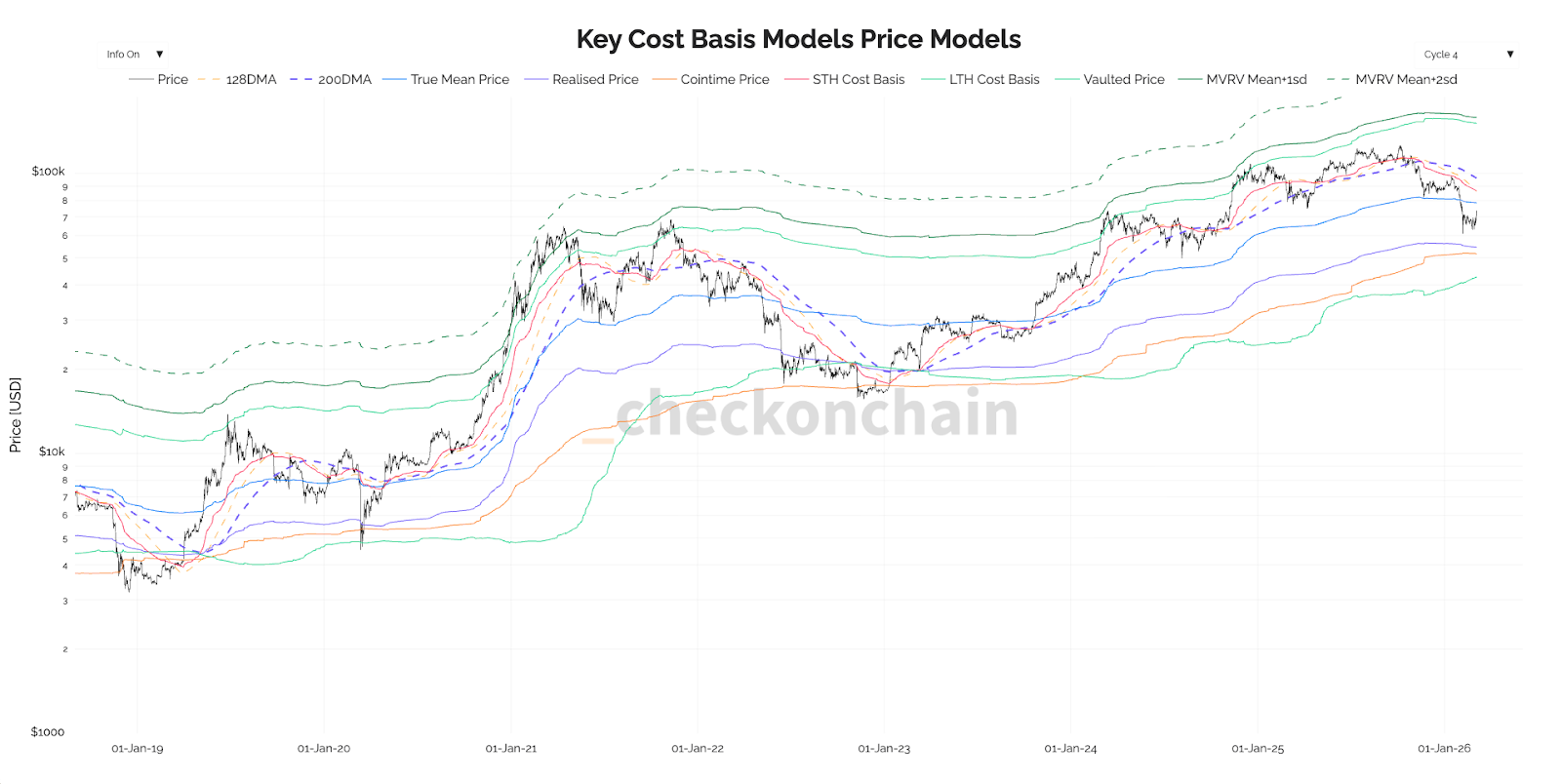
In terms of identifying a range, we'd be looking at the $78k-$84k zone as being the major resistance zone, and we expect price to reject there, should price even make it there - this will be dependent on continued positive Spot flows.
Cryptonary's Take
Bitcoin has broken out of its key horizontal resistance at $72k, driven by positive Spot buying that has resulted in Short liquidations. The conditions are there for Bitcoin to continue moving higher, but it is dependent on the flows to continue being supportive, whilst a resolution in the conflict in the Middle East would aid this.However, when assessing the macro backdrop - likely higher inflation to come, pushing Fed rate cuts out further, and for the conflict in the Middle East to likely be multi-week - the upcoming environment isn't supportive for risk assets. With that in mind, there's still upside for Bitcoin in the immediate term, but we expect the price to reject into the $78k-$84k zone. The $78k-$84k zone would be an optimal zone to de-risk at.
Our view remains the same that we expect Bitcoin to bottom between $50k-$60k in the coming months.
Key Dates Ahead
- Mar 6: US Nonfarm Payrolls + Unemployment
- Mar 11: CPI
- Mar 17–18: FOMC meeting
This content is for informational and educational purposes only. Cryptonary is not authorised or regulated by the Financial Conduct Authority (FCA) or any other financial regulatory body. Nothing in this publication constitutes a personal recommendation or advice to buy, sell, or hold any virtual asset. Virtual assets may lose their value in full or in part and are subject to extreme volatility. You can lose all invested amounts and do not benefit from any form of financial protection. Past performance does not indicate future results.
Continue reading by joining Cryptonary Pro
$1,548 $1,197/year
Get everything you need to actively manage your portfolio and stay ahead. Ideal for investors seeking regular guidance and access to tools that help make informed decisions.


For your security, all orders are processed on a secured server.
As a Cryptonary Pro subscriber, you also get:
3X Value Guarantee - If cumulative documented upside does not reach 300% during your 12-month membership, you can request a full refund. Terms
24/7 access to experts with 50+ years’ experience
All of our top token picks for 2025
On hand technical analysis on any token of your choice
Weekly livestreams & ask us anything with the team
Daily insights on Macro, Mechanics, and On-chain
Curated list of top upcoming airdrops (free money)
3X Value Guarantee
If cumulative documented upside does not reach 300% during your 12-month membership, you can request a full refund.

Our track record speaks for itself
With over 2.4M tokens and widespread misinformation in crypto, we cut through the noise and consistently find winning assets.
Our track record speaks for itself
With over 2.4M tokens and widespread misinformation in crypto, we cut
through the noise and consistently find winning assets.


Frequently Asked Questions
Can I trust Cryptonary's calls?
Yes. We've consistently identified winners across multiple cycles. Bitcoin under $1,000, Ethereum under $70, Solana under $10, WIF from $0.003 to $5, PopCat from $0.004 to $2, SPX blasting past $1.70, and our latest pick has already 200X'd since June 2025. Everything is timestamped and public record.
Do I need to be an experienced trader or investor to benefit?
No. When we founded Cryptonary in 2017 the market was new to everyone. We intentionally created content that was easy to understand and actionable. That foundational principle is the crux of Cryptonary. Taking complex ideas and opportunities and presenting them in a way a 10 year old could understand.
What makes Cryptonary different from free crypto content on YouTube or Twitter?
Signal vs noise. We filter out 99.9% of garbage projects, provide data backed analysis, and have a proven track record of finding winners. Not to mention since Cryptonary's inception in 2017 we have never taken investment, sponsorship or partnership. Compare this to pretty much everyone else, no track record, and a long list of partnerships that cloud judgements.
Why is there no trial or refund policy?
We share highly sensitive, time-critical research. Once it's out, it can't be "returned." That's why membership is annual only. Crypto success takes time and commitment. If someone is not willing to invest 12 months into their future, there is no place for them at Cryptonary.
Do I get direct access to the Cryptonary team?
Yes. You will have 24/7 to the team that bought you BTC at $1,000, ETH at $70, and SOL at $10. Through our community chats, live Q&As, and member only channels, you can ask questions and interact directly with the team. Our team has over 50 years of combined experience which you can tap into every single day.
How often is content updated?
Daily. We provide real-time updates, weekly reports, emergency alerts, and live Q&As when the markets move fast. In crypto, the market moves fast, in Cryptonary, we move faster.
How does the 3X Value Guarantee work?
We stand behind the value of our research. If the documented upside from our published research during your 12-month membership does not exceed three times (3X) the annual subscription cost, you can request a full refund. Historical context: In every completed market cycle since 2017, cumulative documented upside has exceeded 10X this threshold.
TermsRecommended from Cryptonary