Save 23% ($351) & Get a Free 1-1 Call with our Team ⏰ : 0d 2h 59m 43s
WIF technical analysis: Why waiting for the retest improves strategy
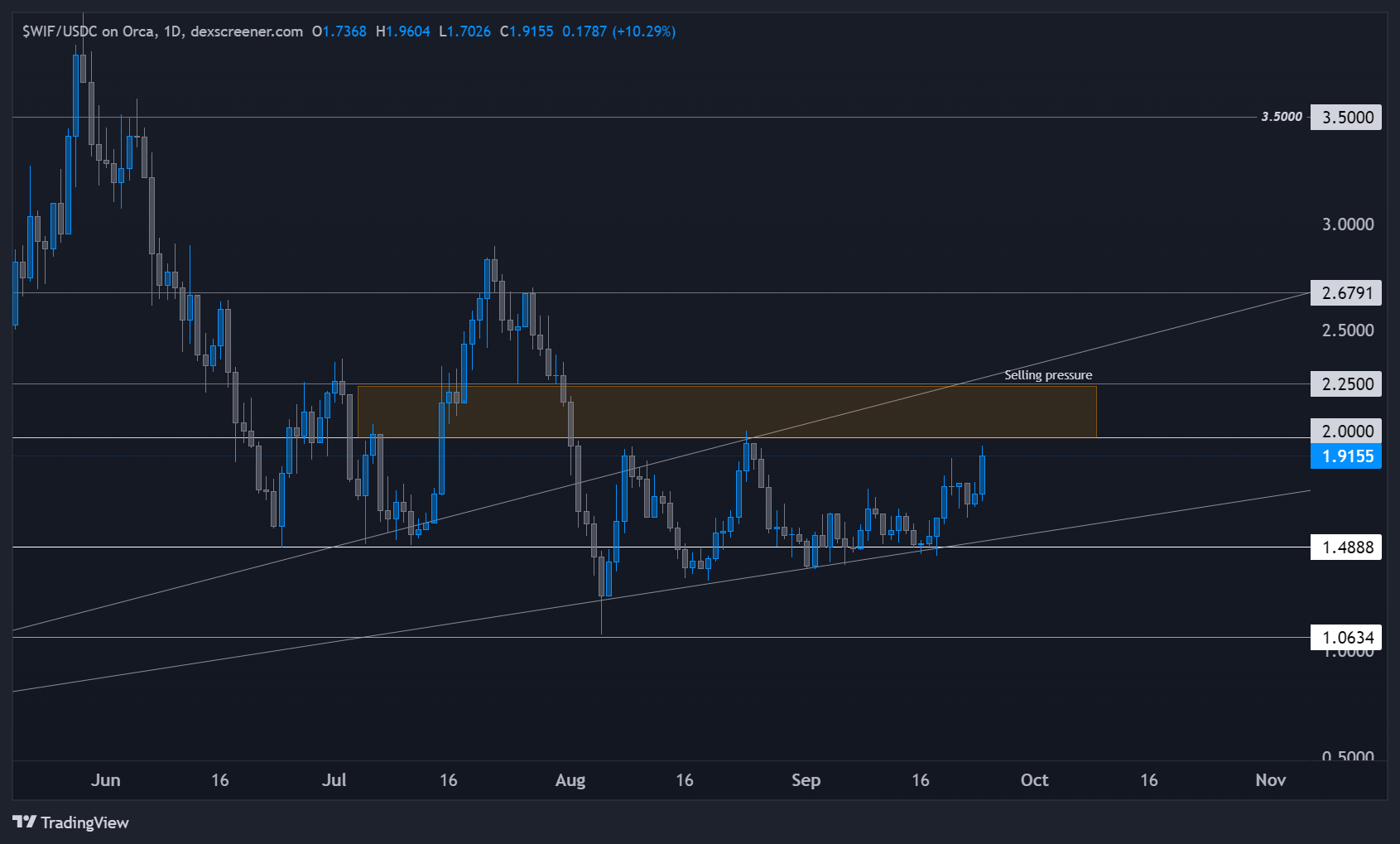
When we trade, understanding why resistance is formed is critical. Resistance levels are created because, at specific price points, sellers consistently step in. In your WIF trade, you've pinpointed a resistance around $2, which is where sellers have been actively entering the market.
Every time the price approaches that level, we see WIF rejected, causing a move lower. Now, why does this happen? When sellers either exit their positions or short the asset at that price, it makes it difficult for the market to break through. The key is recognizing that resistance means sellers are stronger than buyers at that level-until proven otherwise. That's why it's important to wait for a breakout.
Disclaimer: This is not financial or investment advice. You are responsible for any capital-related decisions you make, and only you are accountable for the results.
Waiting for the breakout
What you've done is longed into resistance, which isn't necessarily wrong. In fact, some traders specialize in trading breakouts. But when you're buying right at a resistance level, it can be harder to manage risk. There's less clarity on where to place your stop-loss, and you're effectively betting that this time will be the one where resistance breaks. A more conservative approach is to wait for the breakout to happen and then enter on the retest of the former resistance, now acting as support.Why? Because once resistance breaks, it signals that the sellers at that level have been exhausted or overpowered by buyers. The price often retests the breakout level, and if it holds as support, it gives you much stronger confirmation that buyers are in control. At that point, your entry has better risk management since you can place your stop-loss just below the newly formed support.
Example of breakout and retest
If we look at WIF, there was a key level at $2.69 that served as resistance. We saw the price break through this level, and after the breakout, it came back to retest it. That retest gave confirmation that buyers had reclaimed control of the level, turning it into support. This is the kind of scenario where you have more confidence in entering a long position because you're now buying from a stronger level, knowing that buyers are stepping in to defend that price.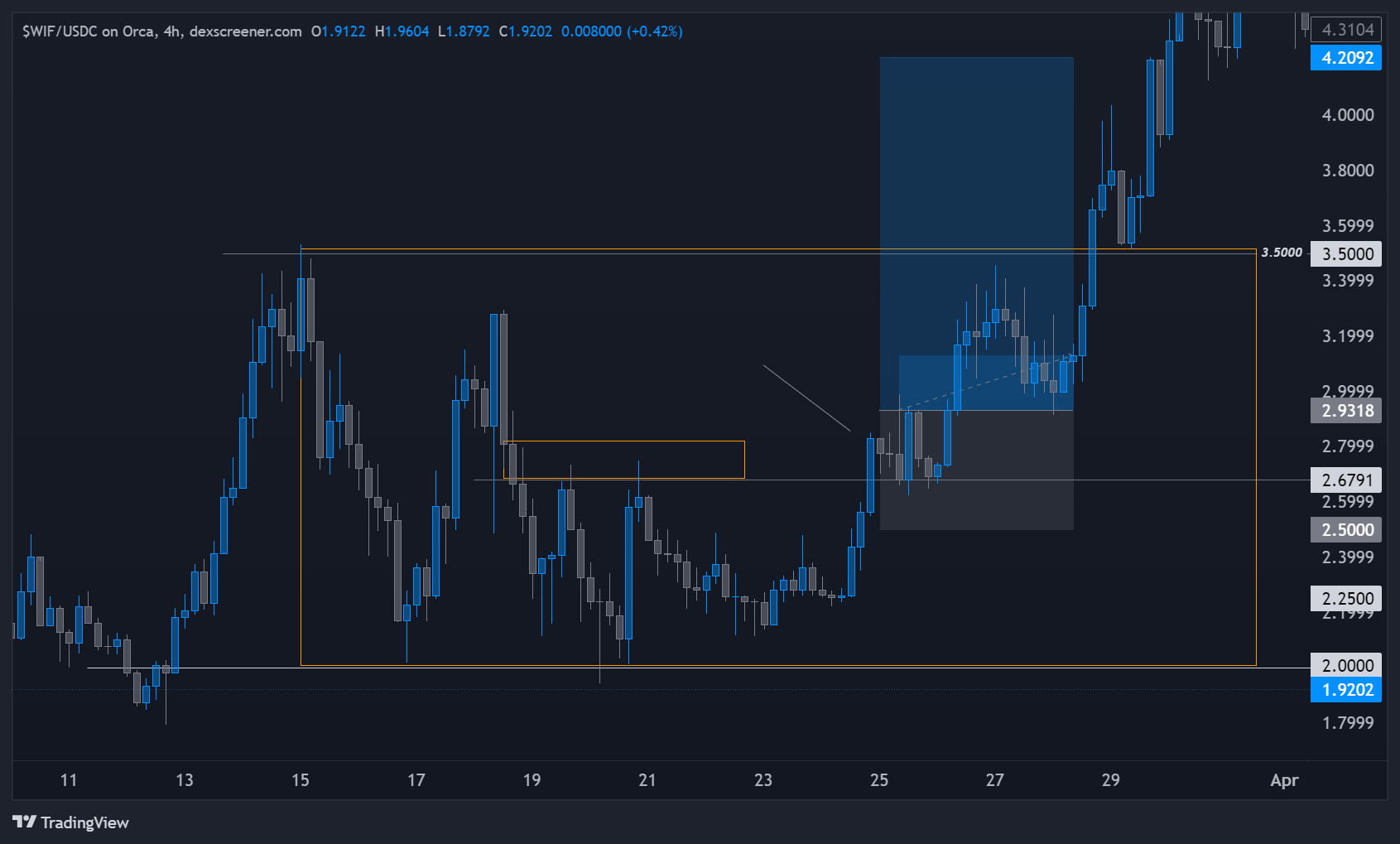
Cryptonary's take
Waiting for a resistance break and retest is a simple yet powerful strategy. It allows you to confidently enter trades, knowing that the previous sellers have been overcome. It also helps with risk management since you can place a stop-loss below the new support level. While breakouts can be tempting to trade right away, sometimes, a bit of patience can put the odds more in your favor. Just a little tip for future trades. You've identified the levels well, which could be another step to enhance your execution.Recommended from Cryptonary