Save 23% ($351) & Get a Free 1-1 Call with our Team ⏰ : 0d 2h 59m 43s
Deep Dive into WLFI: Trump's Latest Retail Trap
President Trump just did something that no other president in the U.S. history has ever done: he started a DeFi platform, raised $715 million in a token sale, and linked his family's wealth directly to the crypto market. Here is what happened...
For the first time in American history, a sitting U.S. president has tied his family’s wealth to a crypto project: World Liberty Financial. At first view, it seems like a big deal: a DeFi hub with its own stablecoin (USD1), governance token (WLFI), and even a bank that could compete with Michael Saylor's Bitcoin playbook.
But WLFI isn't really about innovation when you look deeper. It's more about tokenomics that favour insiders. This launch has all the signs of what crypto experts call "low float, high FDV", which is a situation where there isn't much liquidity, and small players could end up being "exit liquidity".
Let's break this down properly: what WLFI is, why the Trump family is betting a lot of money on crypto, and why the big picture is clearly bullish but WLFI's tokenomics call for extreme care.
Let's dive in...
Disclaimer: This is not financial or investment advice. You are responsible for any capital-related decisions you make, and only you are accountable for the results.
What is WLFI?
At its core, World Liberty Financial (WLFI) is pitched as a user-friendly decentralised finance (DeFi) platform. Think of it as a crypto bank, but without the bank.Here's what it offers:
- WLFI Token: It's a governance token. Holders can vote on platform decisions like token unlocks and upgrades.
- USD1 Stablecoin: A U.S. dollar–pegged coin, backed 1:1 by reserves in treasury bills and cash, already listed on Coinbase.
- WLFI Lockbox: A smart contract that manages token unlocks and allocations securely.
- DeFi Money Market: Borrow, lend, and earn interest on crypto deposits.
The Trump Family Goes All-In on Crypto
Over the past 18 months, we have come to understand that the Trump family is not merely exploring the crypto market; they are fully committed to making money here. What began as memecoins has since developed into a billion-dollar ecosystem that includes stablecoins, treasuries, and DeFi platforms.The chronology is instructive.
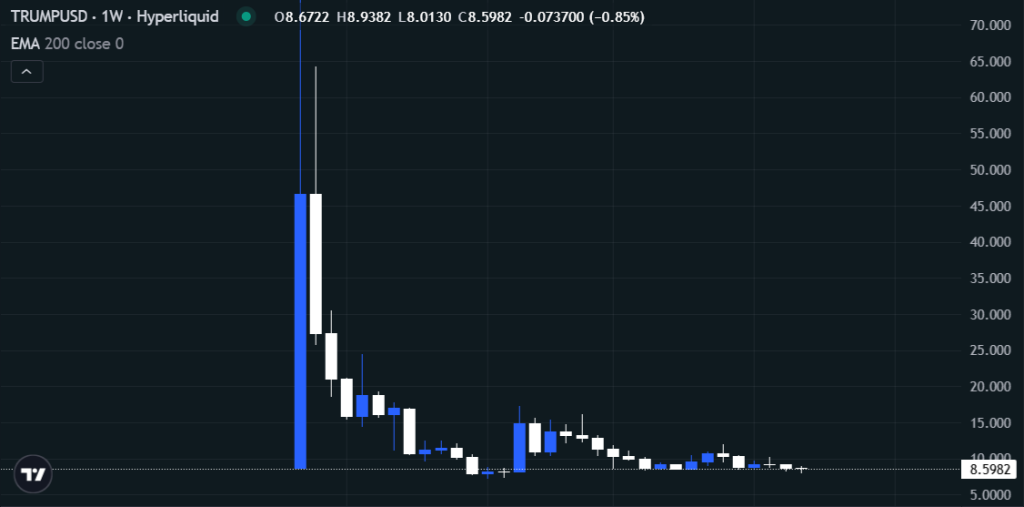
The TRUMP saga started in early January 2025 when the Official Trump ($TRUMP) token was launched on Solana. Suddenly, a seemingly harmless novelty memecoin caught fire. After Trump's public endorsement, $TRUMP skyrocketed from just over $1 to an eye-watering $72 in a matter of weeks. But the excitement was fleeting, as is often the case with "celebrity coins" in the crypto space. After the insiders started taking profits, the token fell to about $9, with latecomers suffering the most.
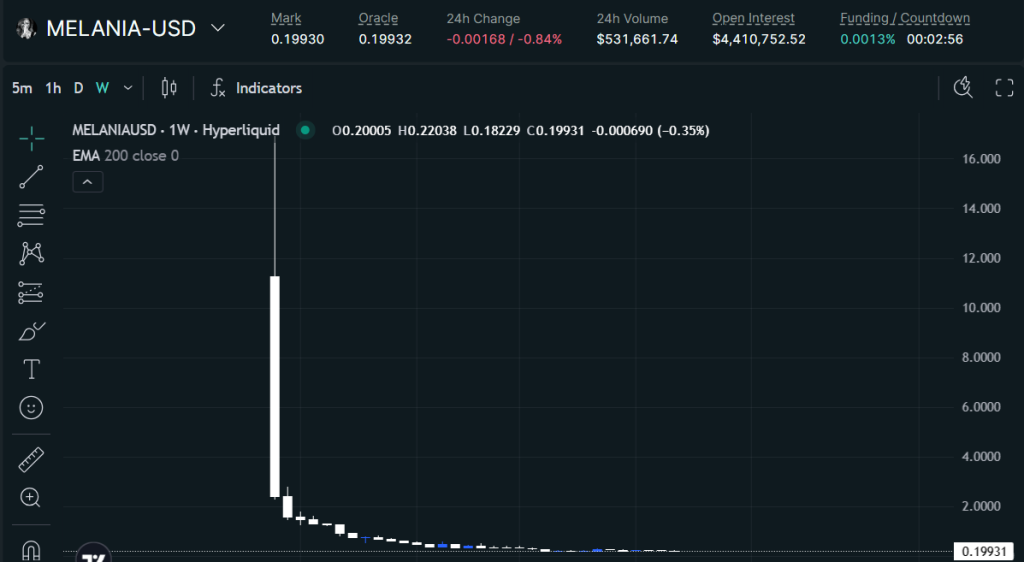
Shortly after, Melania Trump arrived at the party. When her namesake coin, $MELANIA, was introduced, there was a lot of excitement and clever marketing. The fall, however, was even more severe this time. Insiders extracted tens of millions of dollars, while the typical retail investor suffered losses that were even worse than those suffered by $TRUMP holders. These early initiatives set the tone: the Trumps were open to trying their hand at the crypto markets, but it was clear that insiders had the advantage because they made money while the general public was let down.
This explains why World Liberty Financial's (WLFI) mid-2025 launch was so unique. Unlike memecoins, WLFI was marketed as a "serious" platform with a full DeFi ecosystem that included real infrastructure, a governance token, and a regulated stablecoin (USD1). It was more than just a family vanity project; it made $715 million in presales alone and attracted important backers like Justin Sun's Tron Foundation. Trump was sending a message to the world that crypto was now an essential part of his family's financial and political strategy, not just a side project.
The next step was the boldest yet: adding Bitcoin to the balance sheet. In the summer of 2025, Trump Media purchased $2 billion worth of Bitcoin as part of its long-term treasury strategy. By suggesting the creation of a National Bitcoin Reserve, Trump went one step further and essentially turned Bitcoin into a strategic asset for the US, much like nations do with gold. Supporters of Bitcoin applauded this as the most overt political endorsement of Bitcoin ever from a U.S. president.
But this was not enough for Trump. The family also created a crypto treasury business that was based on Michael Saylor's corporate Bitcoin adoption model, "Strategy". The idea was simple but effective: create a NASDAQ-listed company with WLFI and Bitcoin tokens on its balance sheet. Traditional investors, such as Vanguard ETFs and pension funds, could thereby indirectly gain exposure to WLFI without ever having to deal with crypto wallets.
By the middle of 2025, the numbers were obvious. Analysts estimate that almost 40% of Donald Trump's net worth was made up of Bitcoin, WLFI tokens, and the earlier meme currencies. The family's WLFI holdings were worth over $9 billion when it was founded.
This is where money and politics meet. During the Trump administration, the SEC quietly halted or postponed a number of lawsuits against significant cryptocurrency companies, including Coinbase, Binance, Ripple, and Tron. The most notable example was probably Justin Sun's Tron Foundation, which invested in WLFI early on. In 2025, WLFI's SEC malfeasance case was suddenly "paused" just as the company was getting ready to launch.
The message was clear: Trump is changing the U.S. policy to match his family's financial holdings.
WLFI's Treasury Play:
Recently, World Liberty Financial (WLFI) has partnered with ALT5 Sigma, a small NASDAQ-listed company. ALT5 established itself as a public entity that holds roughly 7.5% of the entire 100 billion supply of WLFI by issuing shares valued at $1.5 billion in exchange for $750 million in WLFI tokens. In effect, this turns the stock into a stand-in for the token. By connecting WLFI to a publicly traded company, Trump's team created an indirect on-ramp for mainstream investors, such as Vanguard ETF managers and retirement 401(k) funds, to gain exposure to WLFI without dealing with a headache associated with managing a cryptocurrency wallet or private keys.But before we get excited about a potential flywheel introduced by this financial engineering, let's look at the tokenomics of WLFI.
WLFI's Tokenomics:
The WLFI token launch on Ethereum raised eyebrows across the crypto industry for one reason: its low float, high FDV setup:The Numbers:
- 100 billion total supply.
- 20% (20B) unlocked at launch for presale buyers.
- 80% (80B) locked, with future unlocks decided by governance votes.
- Trump family + allies: hold 22.5B tokens (~22.5% of supply).
Within hours, the price plunged to ~$0.25, slashing FDV to ~$24B. Retail traders who aped in at launch prices were instantly down bad.
And liquidity? Almost non-existent. CoinGecko flagged WLFI with a warning: only ~$99 worth of liquidity was recorded at one point.
Why Low Float + High FDV is Dangerous
- Low float: Only a tiny percentage of supply trades freely. This means even modest buys or sells cause massive swings. A whale offloading $1m worth of WLFI can nuke the price by double digits.
- High FDV: Price × total supply = massive paper valuation. But since most tokens are locked, this valuation is theoretical. When unlocks happen, new supply floods the market, crushing late buyers.
- Insider skew: With the Trump family controlling over $9B worth of WLFI at launch, the setup looks heavily tilted in favour of early insiders.
Learning From the Past: $TRUMP and $MELANIA
This isn't the first time Trump-linked coins have played out like this.The $TRUMP memecoin is a case study:
- Launched at ~$1.20.
- Pumped to ~$72 after Trump hyped it.
- Collapsed to ~$11 within months.
The pattern is clear: Trump-branded coins create hype, insiders unload, retail gets left holding the bag.
The Bigger Picture: Bullish Macro, Risky Micro
Here's where nuance matters.- On the macro level, Trump's embrace of crypto is hugely bullish. We've never had a U.S. president so publicly pro-Bitcoin, pro-stablecoin, and willing to push back against regulators. Policies like the GENIUS Act (stablecoin regulation) and a friendlier SEC could unlock a true crypto supercycle. Institutional adoption is accelerating. If WLFI is a signal of political support, it could fuel broader confidence, push ETFs deeper into portfolios, and attract trillions from pension funds and treasuries.
- But on the micro level, WLFI as a token looks like a landmine for retail. Its low float, high FDV structure, insider-heavy allocation is the exact setup that leaves normie/retail investors vulnerable.
- Bullish for crypto overall.
- Defensive for WLFI specifically.
Cryptonary's Take: Zoom Out, Stay Sharp
The Trump family's WLFI launch is historic. A sitting U.S. president tying his name, his campaign, and billions of his own wealth to a DeFi project is something nobody thought possible five years ago.For the crypto market as a whole, this is a net positive. Political backing + institutional flows = long-term bullish momentum. The bullish narrative looks very strong, as long as the administration sitting in Washington is aggressive with so much of their personal wealth at stake.
But WLFI itself is not a safe bet for retail. We are not buying the launch. The tokenomics are skewed, the FDV is inflated, and liquidity is razor-thin. History shows Trump-branded tokens pump fast and crash faster. The positive is that Ethereum is a top of the order token for the Trump family, with their highest holding signalling a shift to ETH, which signals a broader rotation among major crypto assets in the market. (Check out our latest rebalancing piece on how we are optimising our portfolio to outperform the market)
So the takeaway is simple:
- Bullish on crypto.
- Careful on WLFI.
Peace!
Cryptonary, OUT!
Recommended from Cryptonary