Save 23% ($351) & Get a Free 1-1 Call with our Team ⏰ : 0d 2h 59m 44s

So, what can we make out of the current state of the market, and where are we likely to go from here?
In today's market update, we will cover a number of different topics, starting with a BTC update and a review of Fed-speak and interest rates.
We also touch on how crypto equities and ETFs are faring and what their performance could mean for the rest of the market.
Let's dive in!
Disclaimer: Not financial or investment advice. You are responsible for any capital-related decisions you make, and only you are accountable for the results. “One Glance” by Cryptonary sometimes uses the RR trading tool to help you quickly understand our analysis. They are not signals, and they are not financial advice.
BTC update
We have had a major pullback following the first day of the ETF, and now BTC seems to be forming a bear flag pattern.These are not ideal and usually have a downside bias.
We have inserted two target areas that would be the targets for a bear flag breakdown in the chart below.
$BTC
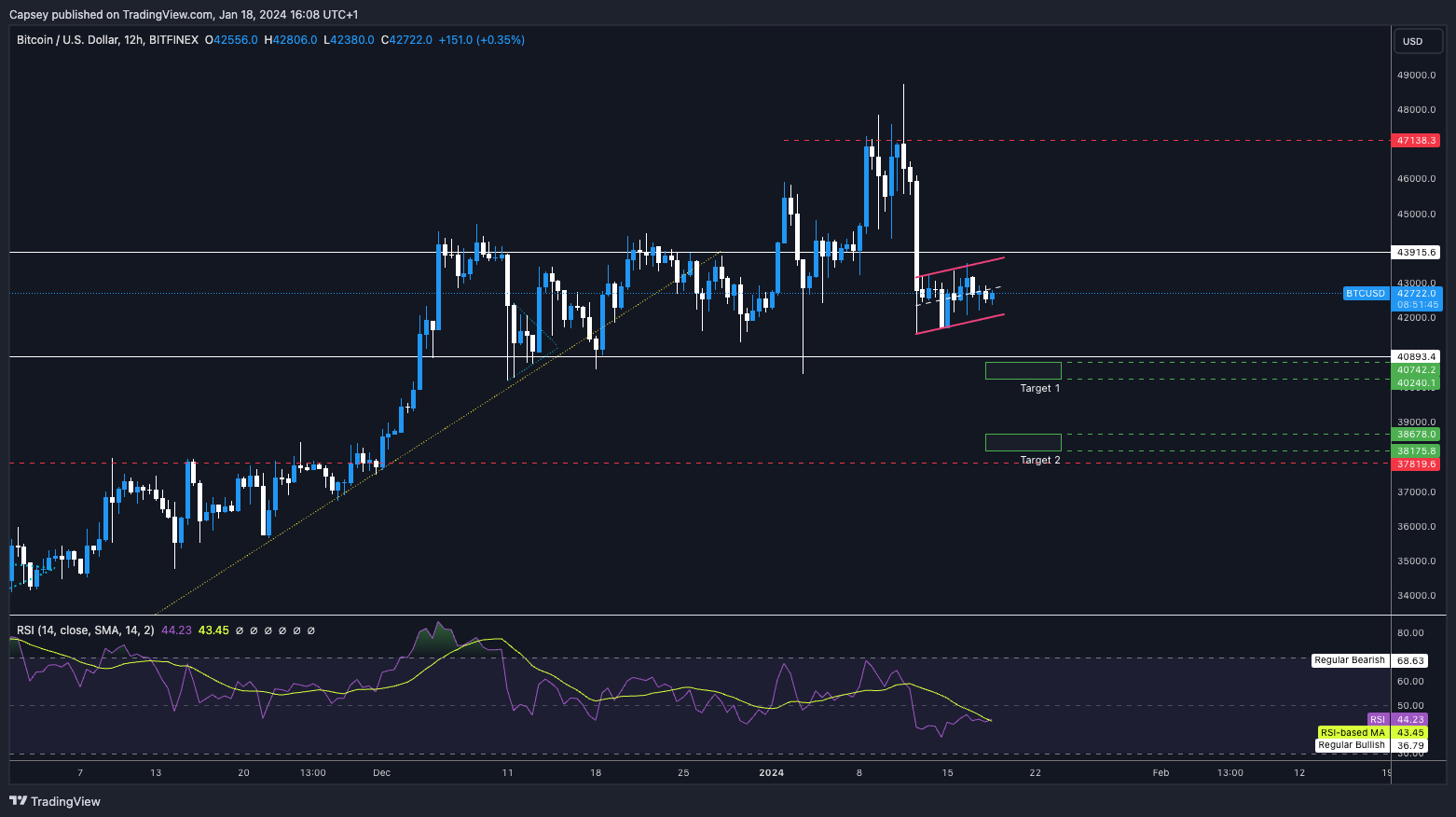
Ultimately, BTC is still trading between $40,900 and $44,000. We feel confident we won't get above $44k anytime soon.
In our minds, the most likely outcome is continued ranging in this tighter range of the flag.
Fed-speak and rates
This week has been quite a key week for Fed-speak.What we've essentially seen, and not just from Fed members but also from Central Bankers around the world, is this push towards imminent interest rate cuts and a rapid rate cut cycle.
Firstly, if we get a rapid rate-cutting cycle, this is not positive as it would mean we're in a recession, and all risk assets will likely witness a nasty sell-off. That's not what we want.
What we would like to see is a "soft landing" or "no landing" scenario play out. This would be light, gradual rate cuts, maybe just 3 x 25bps this year, before further easing next year.
The markets have responded to the Fed-speak this week.
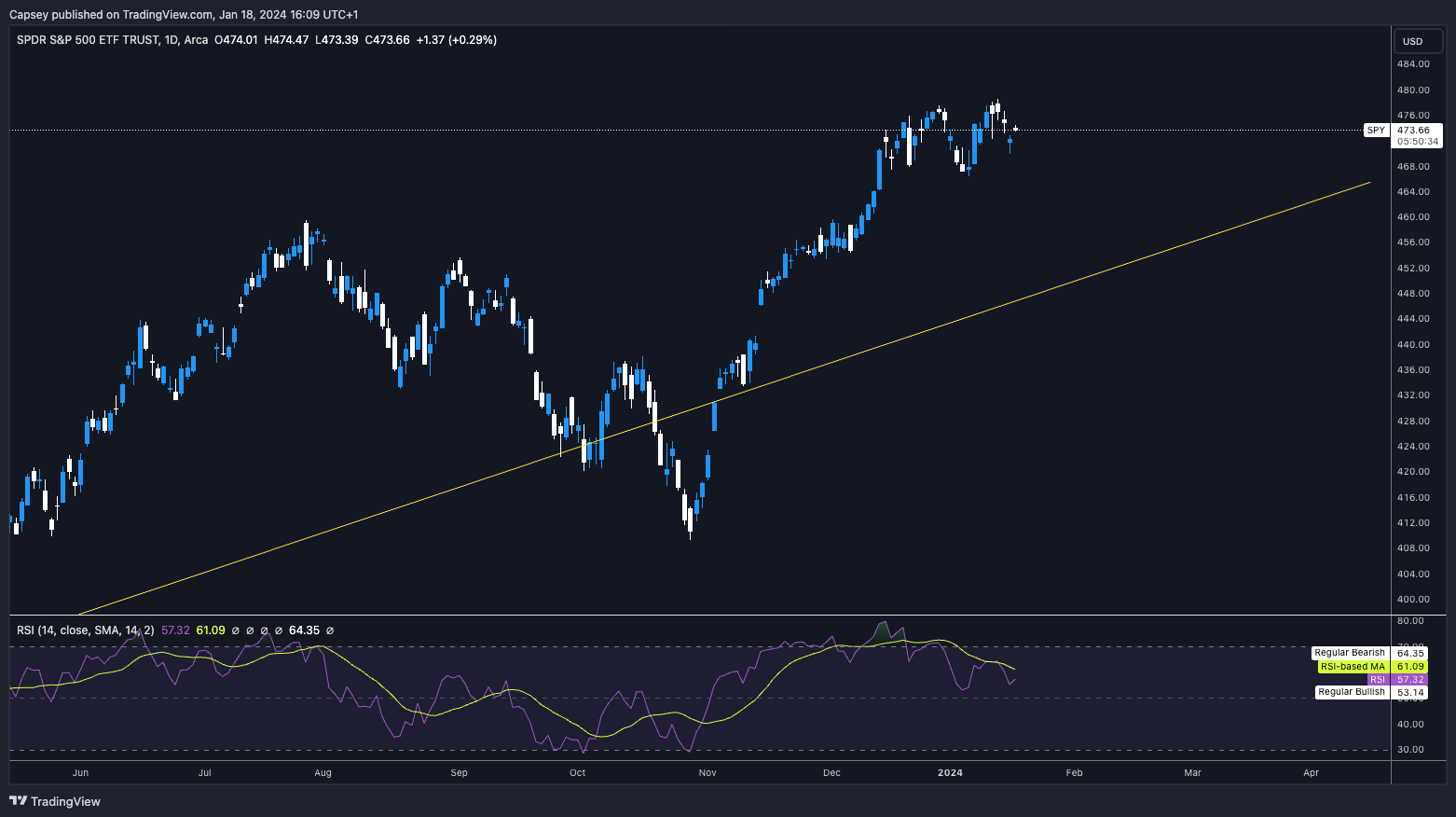
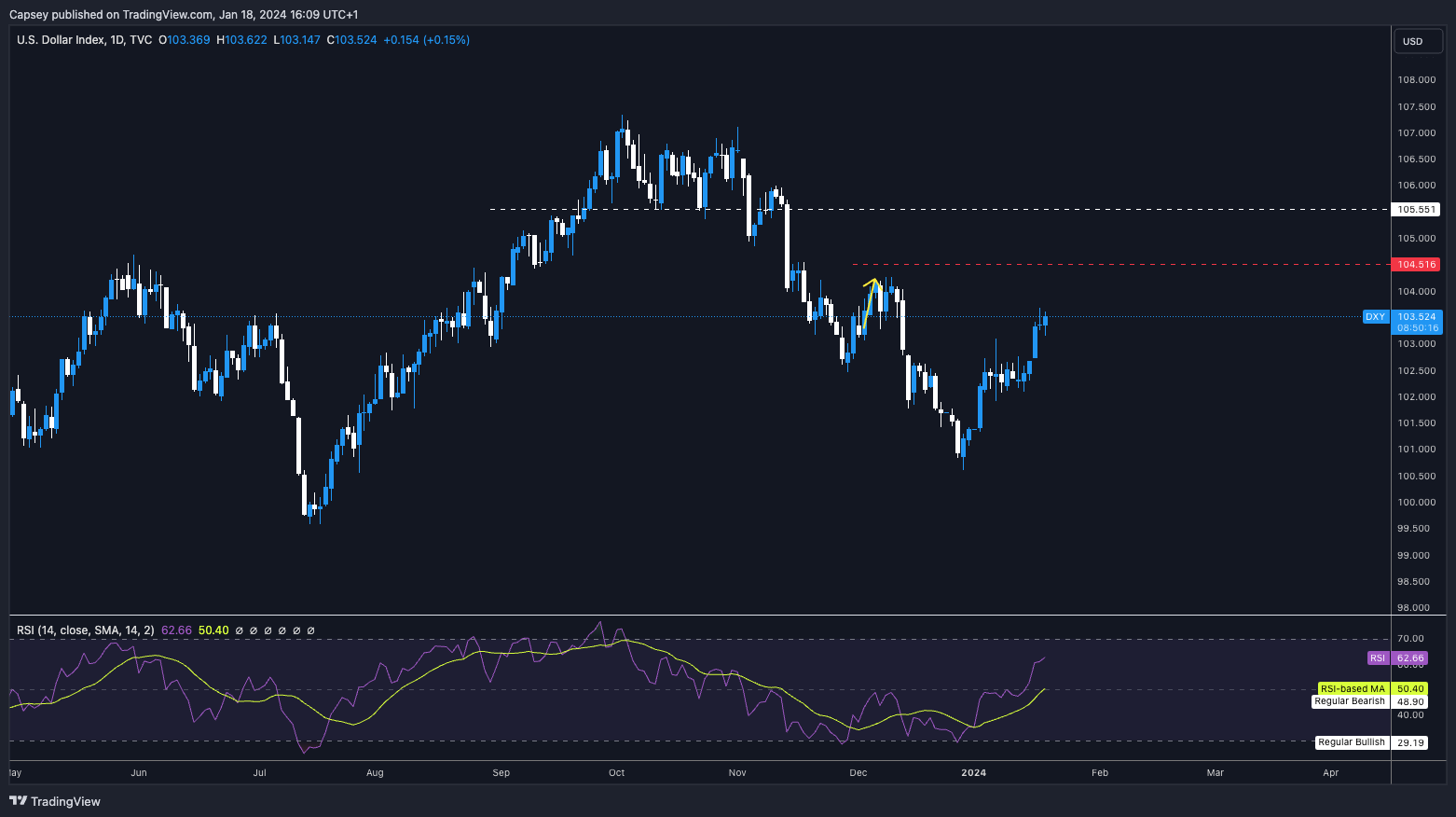
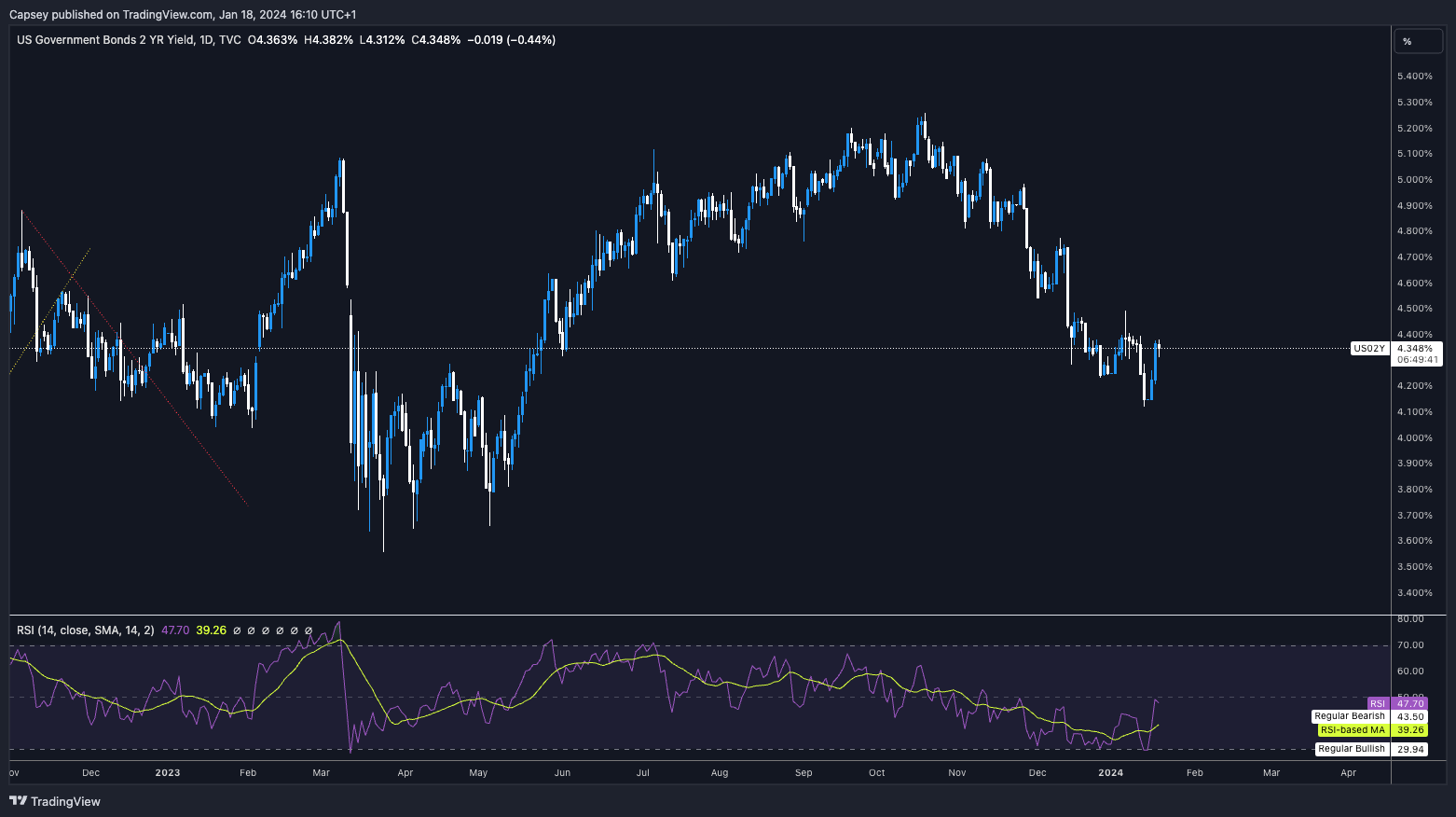
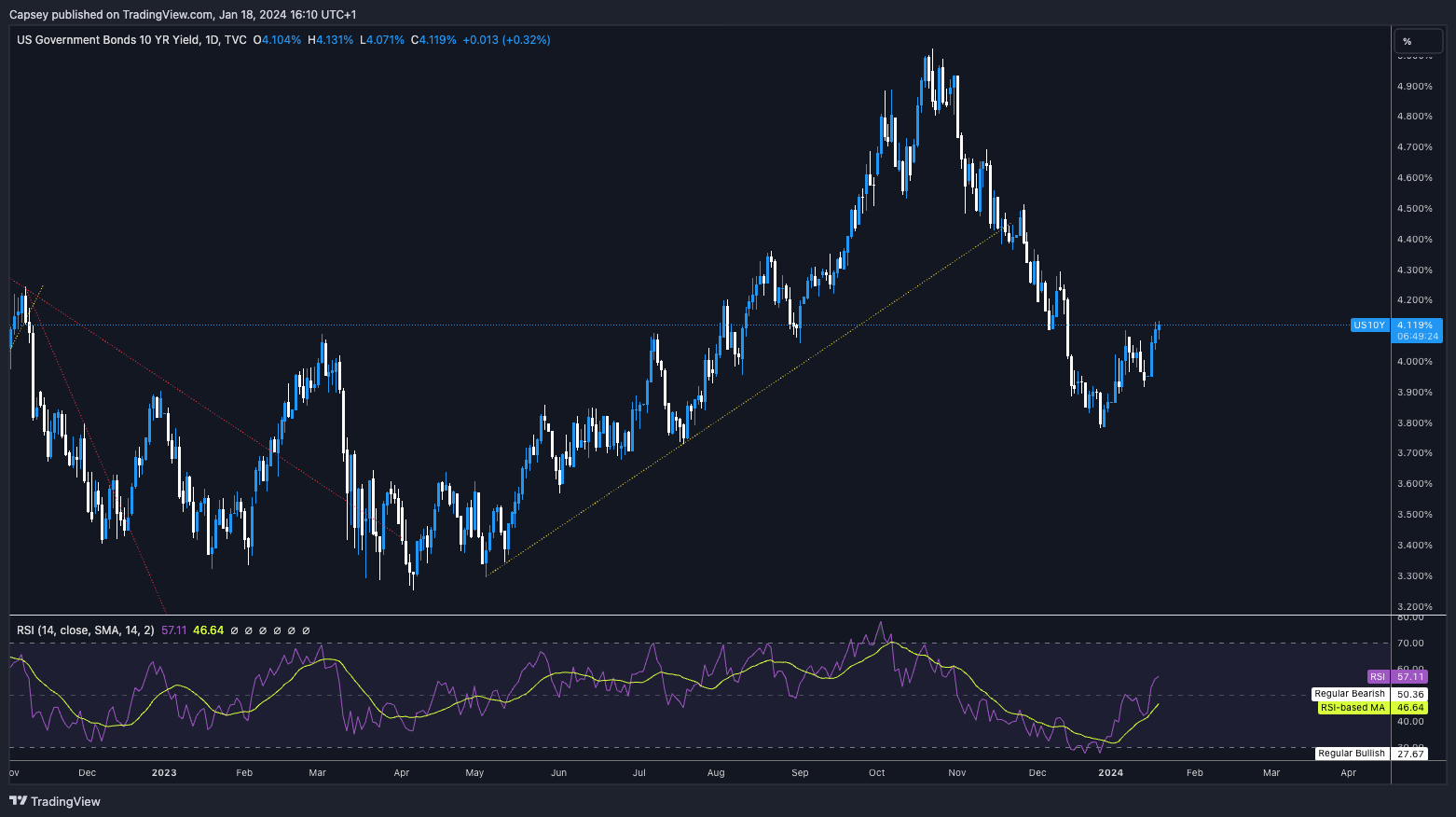
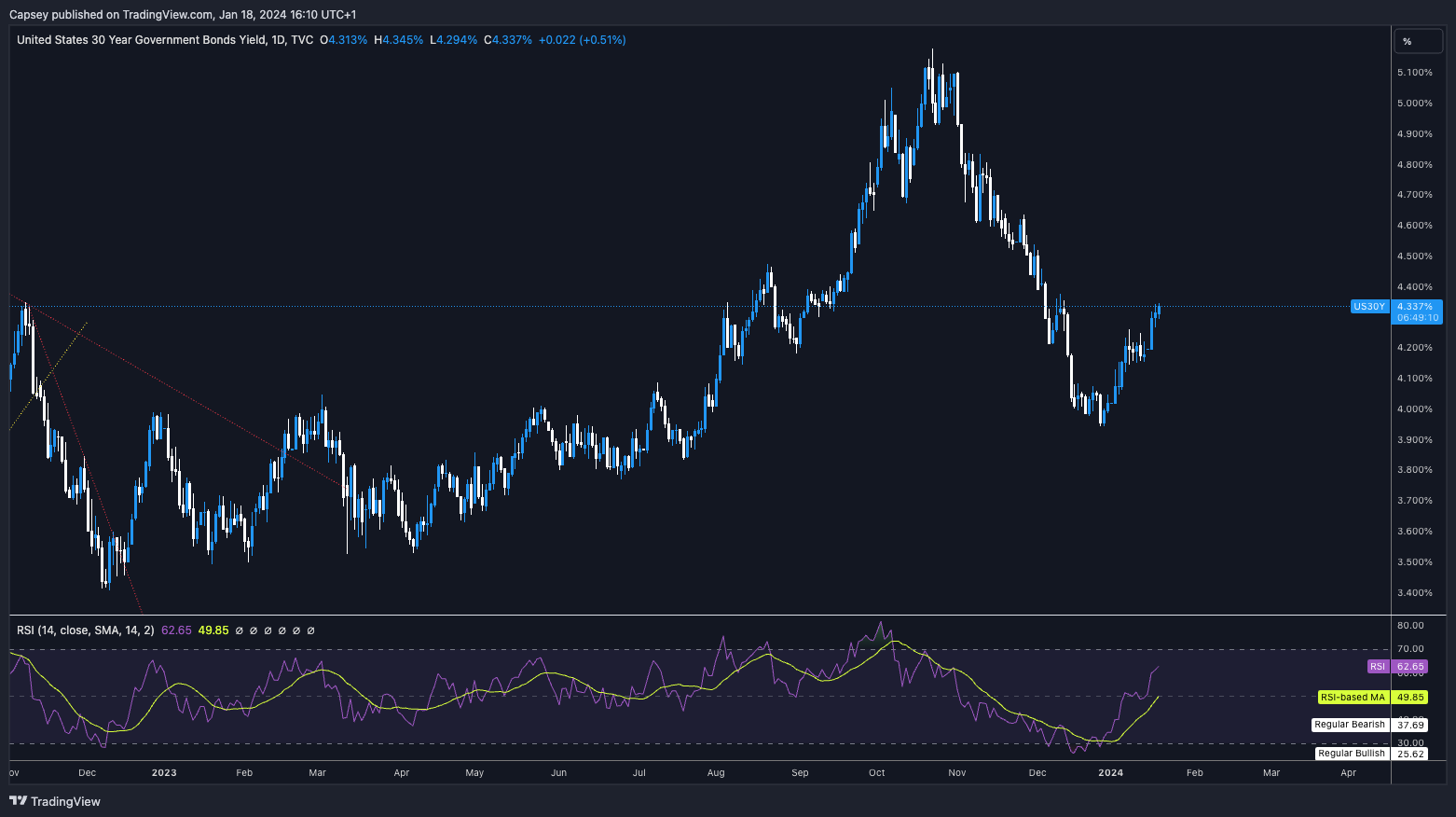
We've seen Bond Yields and the DXY (Dollar Index) re-price higher - bearish for risk assets. This has seen the S&P pull back 1%, which isn't too bad, considering how Bond Yields and the DXY have moved higher.
However, we've now had Jobless Claims coming in much lower than expected, indicating that the labour market is still strong.
This could help push the DXY and Bond Yields higher, meaning a continuation of the trend and suppressing of risk assets going higher.
See the charts below.
$SPX
ETFs and crypto equities
We have included two tweets from Bloomberg ETF experts breaking down the inflows and outflows of the ETFs so far.The summary is this: Grayscale is responsible for large amounts of selling pressure.
Of course, they are. Their fee is 1.5% (about five times more than everyone else), and they're carrying a load of bag holders that they haven't been able to sell for the past three years.
So, it is not surprising that they did some unloading in the first week of being able to sell.
But ARK, Blackrock, and Fidelity are all doing well in terms of inflows and, so far, are doing a good job of making up for/offsetting the selling of GBTC (Grayscale).
So, this is positive and can be seen as bullish... on the surface.However, these ETFs, Blackrock, ARK, etc, are waiving or giving reduced fees for the first capital inflows to their ETFs.
So yes, the first few billion will flow in quickly to take advantage of the low/discounted fees or waivers offered.
The key question is, will we continue to see positive inflows once these allocations are taken up?
So far, these positive inflows provide liquidity for GBTC to be sold into.
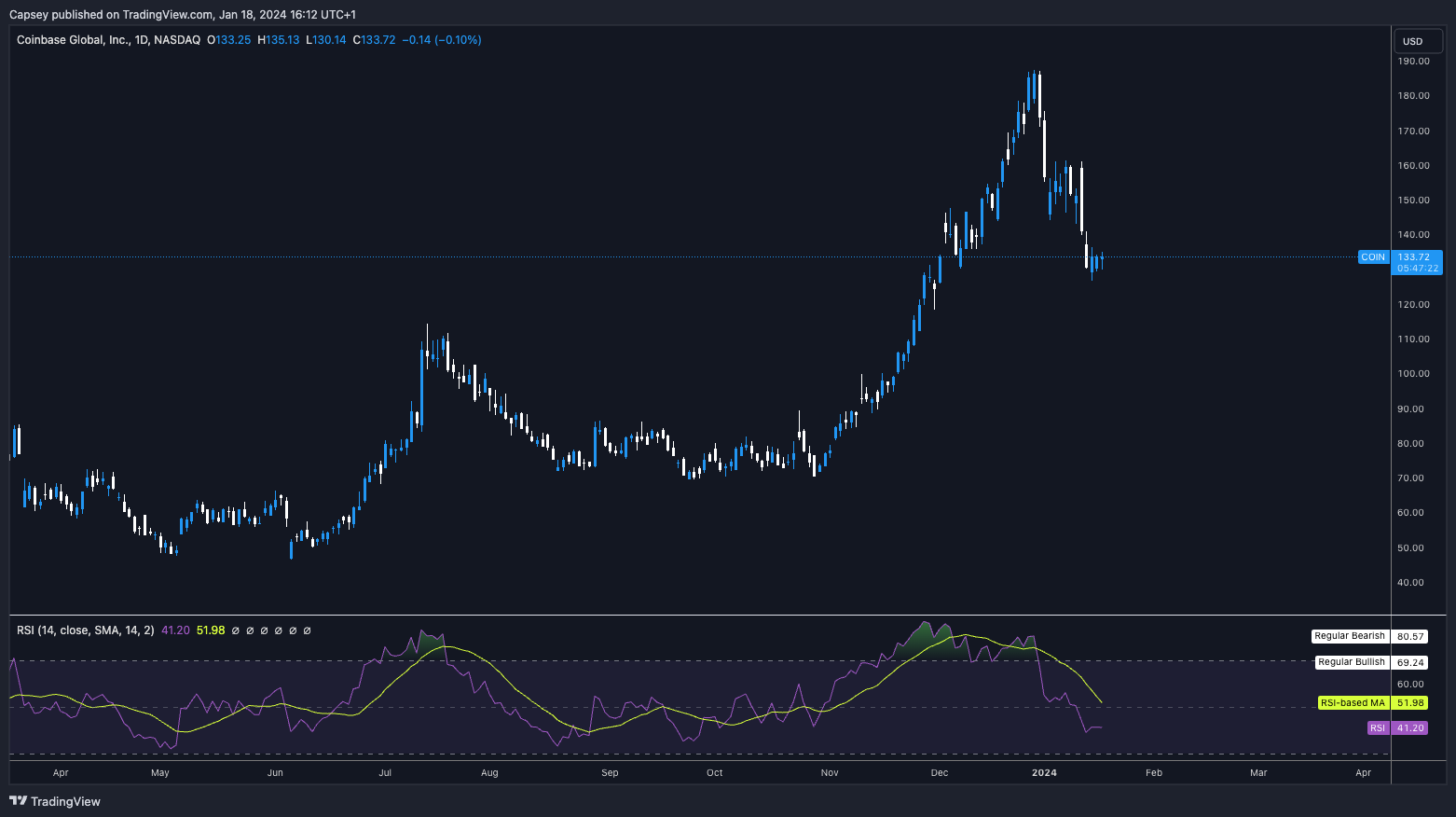
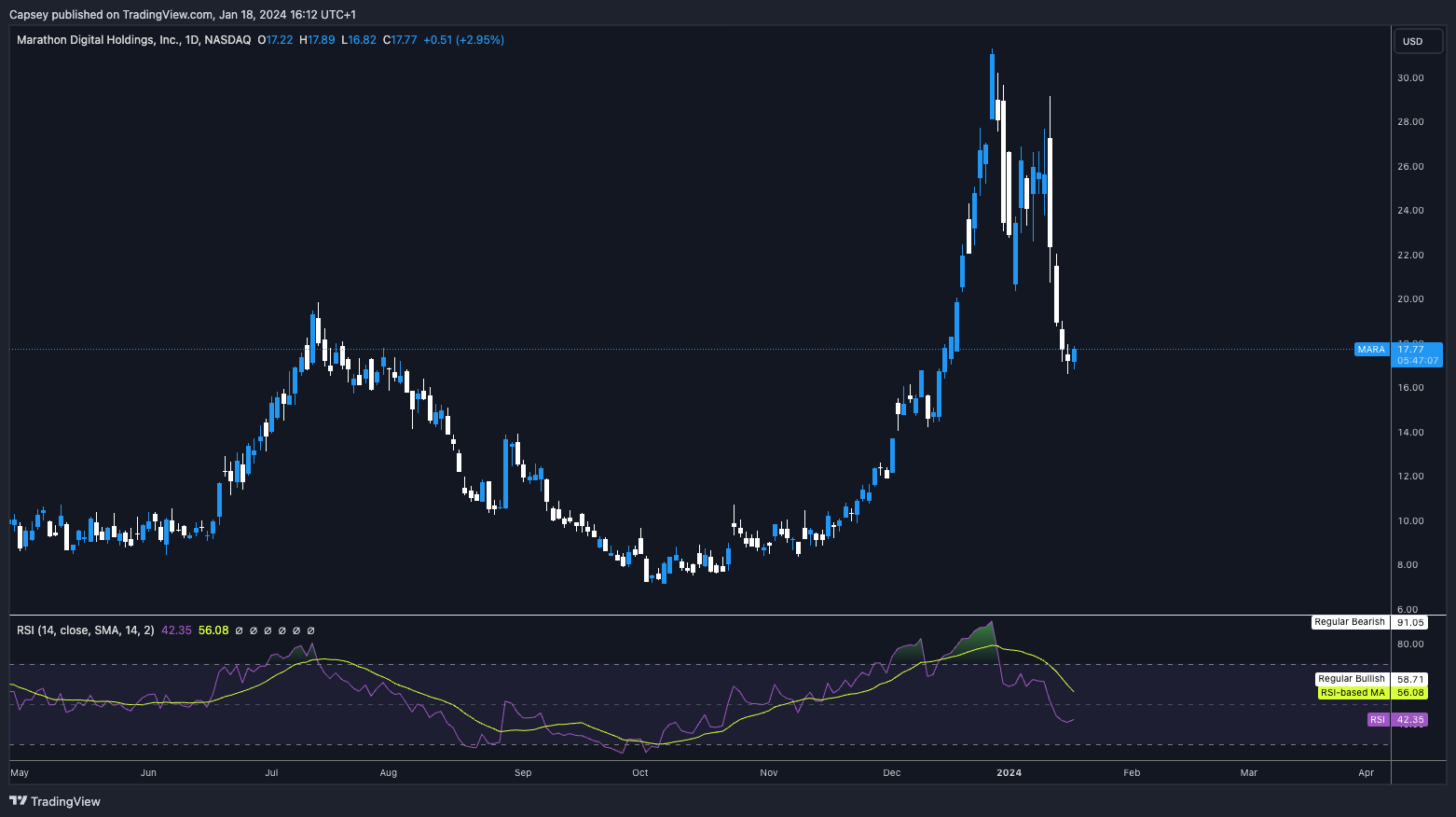
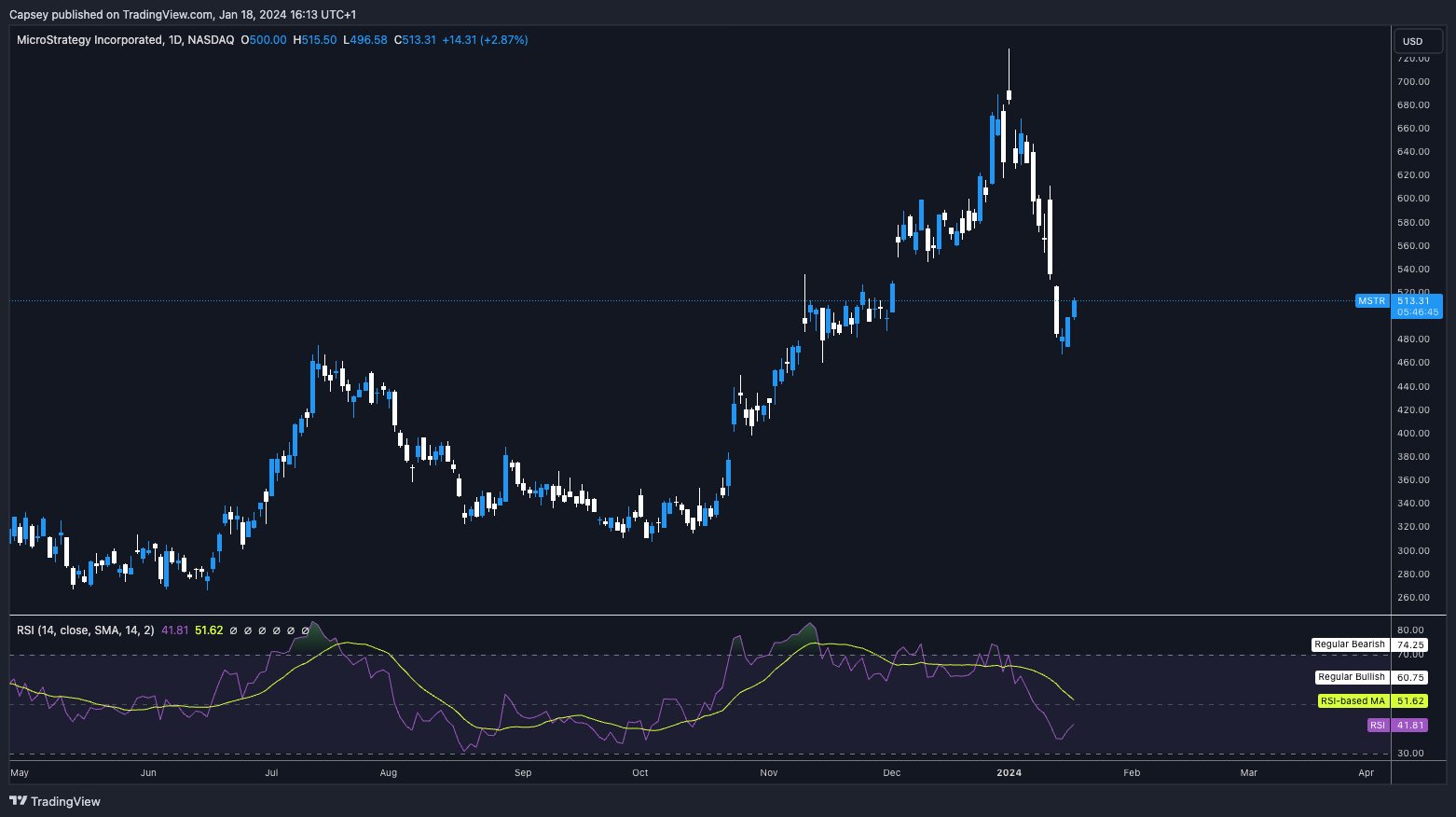
What you would want to see here is crypto equities getting a bid. We know there was heavy insider selling of Coinbase shares just before the ETF approval. Also, crypto equities mostly sold off quite dramatically.
What you'd want to see now is a bit of a bid into those. But we're not really getting those bids. It's not a major concern because it may be the case that the money that flowed out of crypto equities just now rotates into the ETFs.
Again, we'll have to track and keep an eye on this.
$COIN
Cryptonary's take
As you know, we were mostly in the ETF "sell the news" camp.One of our analysts even cashed some of their SOL at $99 – they have now re-bought back at $95.
But, when we look at many charts, we think some have already pulled back quite nicely, while others need further pullbacks.
Looking at the macro, the RRP looks like it'll drain to $0 by the end of March. This may provide liquidity issues for macro markets and present a possible opportunity to buy more crypto lower.
Now, the FED will step in and solve this issue if it happens, but risk assets would likely sell down meaningfully between the issue happening and the FED stepping in.
Therefore, we currently want a 70% crypto to 30% USDT exposure, as we want enough ammo (USDT) on the side to take advantage of a price pullback if we get one.
If this liquidity issue doesn't come to fruition, then we can still put the 30% to work, knowing a possible big macro issue isn't imminent on the horizon.
In our opinion, this is good risk management.
Recommended from Cryptonary