Save 23% ($351) & Get a Free 1-1 Call with our Team ⏰ : 0d 2h 59m 43s
VisaNet is the world’s leading payment network. It regularly handles anywhere from 2,000 to 4,000 transactions per second and has the capacity to handle over 50,000 more.
On the other hand, the Bitcoin network can only handle seven transactions per second. The Ethereum network, central to the operation of many decentralised finance (DeFi) protocols, can only handle approximately 20 to 30 transactions per second. Both networks are also subject to high transaction fees.
If we want to replace the centralised, traditional financial system with a decentralised alternative, then it becomes imperative that it be at least usable as the incumbents. This is a huge problem that needs to be solved to advance DeFi and the wider cryptocurrency economy further.
While Ethereum developers are certainly working on solving these issues with L2 scaling and Proof-of-Stake, Solana has already solved this scalability issue, and that's why we believe that this third-generation blockchain is a game-changer.
Disclaimer: This is not financial or investment advice. You are responsible for any capital-related decisions you make, and only you are accountable for the results.
What is Solana?
Solana is a fast and efficient blockchain platform designed to facilitate the fast, cheap, and scalable execution of decentralised applications (dApps).Launched in 2020, Solana aims to overcome the limitations of other blockchain platforms by implementing innovative technologies that enhance its scalability and performance. The blockchain is capable of processing over 710,000 transactions per second (TPS) without requiring additional scaling solutions, making it ideal for real-time applications such as games and financial services.
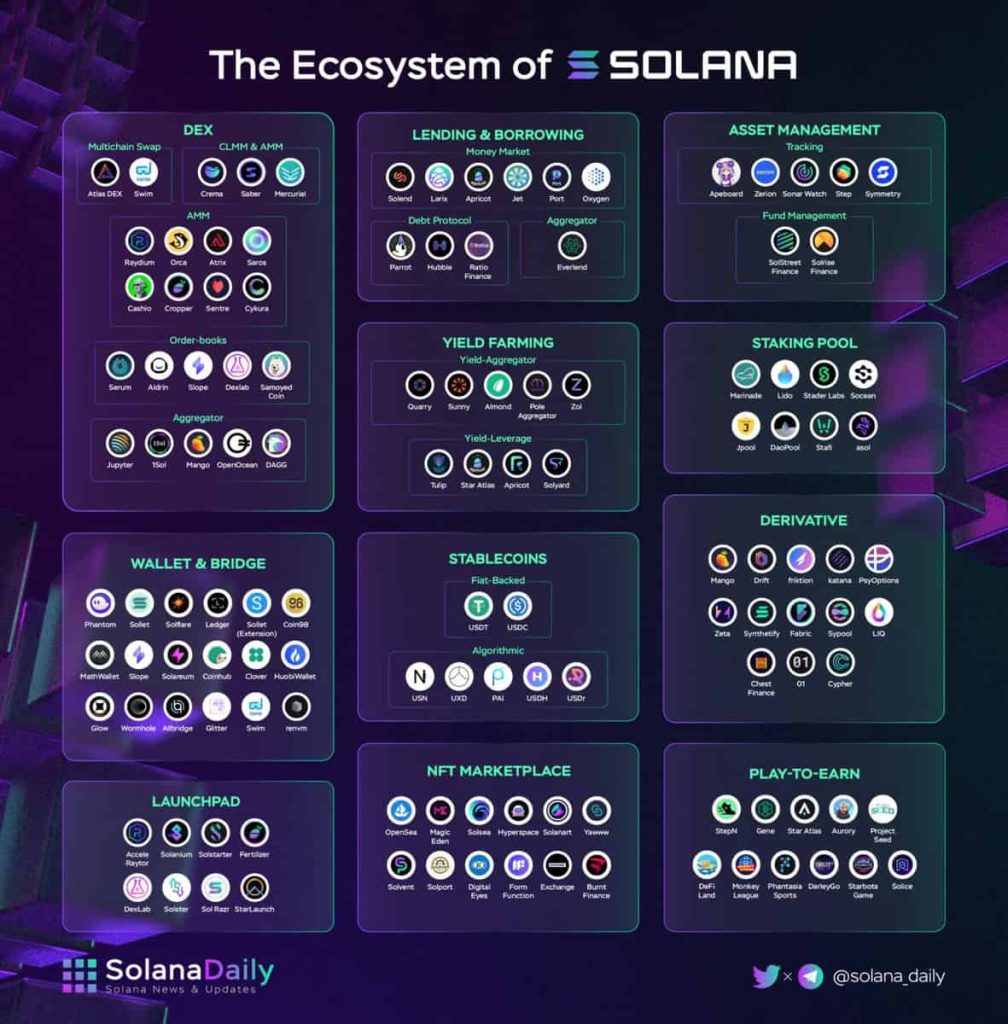
Solana's architecture supports the creation of smart contracts and DApps, offering a versatile solution for various use cases, including decentralised finance (DeFi) platforms and non-fungible token (NFT) marketplaces.
Unlike Ethereum, which relies on multiple blockchain layers for scaling, Solana achieves scalability with a single-layer architecture maintained by a network of powerful computers capable of storing vast amounts of data.
Its native currency, SOL, is used for transferring value and securing the network through staking. It has quickly become one of the top 10 cryptocurrencies by market capitalisation.
How does Solana work?
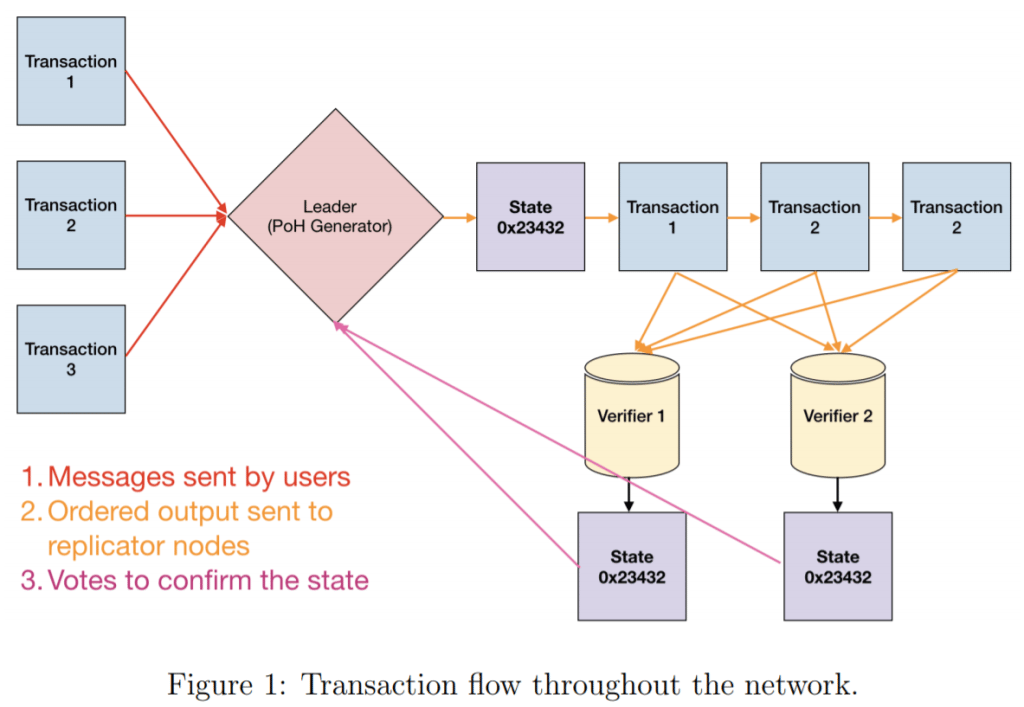
Solana operates using a unique consensus mechanism that combines Proof of History (PoH) and Proof of Stake (PoS) to achieve high-speed and efficient transaction processing.At the core of Solana's protocol is Proof of History, which provides a cryptographic timestamp for each transaction, serving as a digital record of events occurring on the network.
The Proof-of-History (PoH) is not a consensus mechanism per se; it is a component of Solana's Proof-of-Stake consensus feature. PoH is the main innovation that has allowed Solana to boast such fast and efficient transaction processing and verification compared to conventional blockchain networks.
What is Solana's innovation?
Before discussing the investment thesis and potential economic opportunities in Solana, it is important to set the stage by examining Solana's innovation. Solana's technological innovation is a...Recommended from Cryptonary